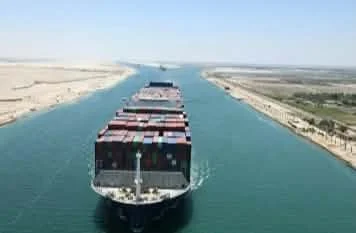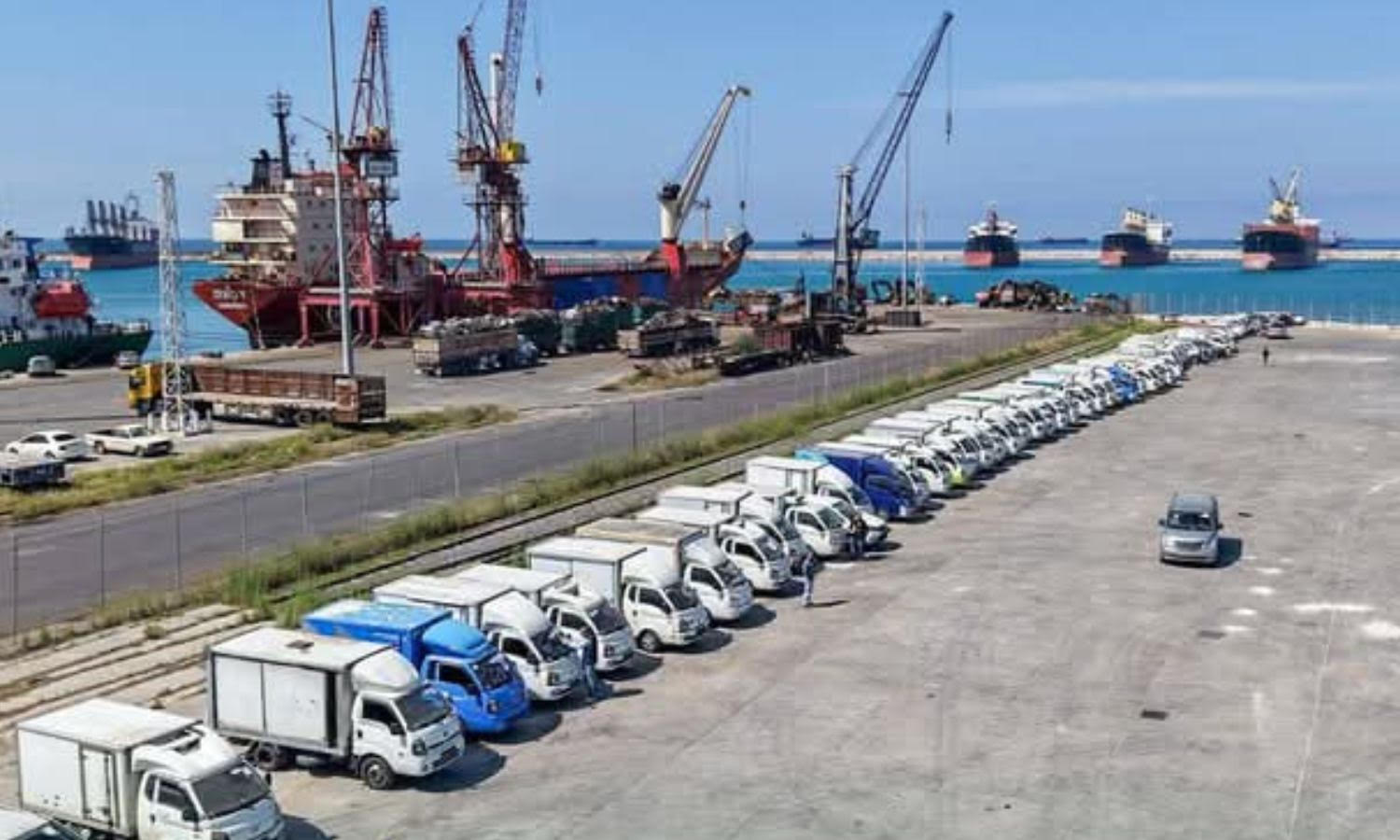
Syria's geo-strategic location and new leadership have made it a magnet for investments in the maritime sector.

Syria : Iyead Khalil
Syrian ports are distinguished by their Geo- Strategic location, as they connect the three continents of Asia, Africa, and Europe. Where the location makes them an important and Logistic gate point between local and global markets which enhances their position as a regional logistics center. Syria has three main ports: the port of Latakia, the port of Tartus, and the Banias oil port.
Capt Nezar Abdalkrem Mohamad, a first-class marine guide (chief pilot), said: A full year after the changes that took place in Syria following the fall of the previous regime, we must shed light on the important transformations in the field of maritime work, especially in the Syrian ports of Tartus, Latakia, and Banias
Adding : " We observe that these ports are regaining their vital roles for which they were established as a gateway to the Middle East on the Mediterranean Sea. also observe an increase in traffic to and from them and a restoration of confidence for most Syrian and international maritime companies."
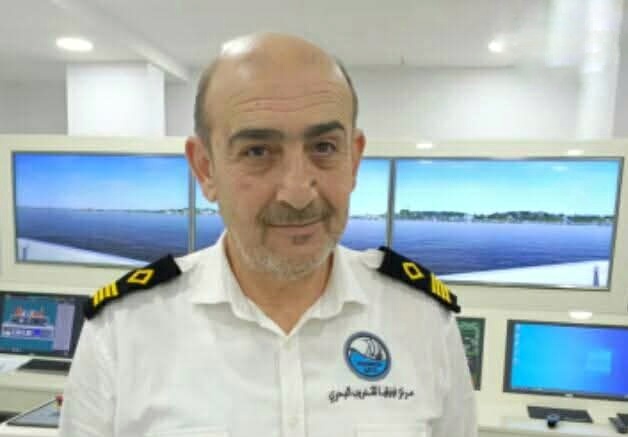
Capt Nezar Abdalkrem Mohamad returned this to the new thinking, which was followed by immediate on-the-ground measures to eliminate most of the negative aspects that existed, as well as to amend and eliminate restrictions that were imposed in all sectors within and outside the ports, such as the issue of land transport of goods arriving from or departing from them, as well as the unification of customs at all land and sea border crossings.
The return of car carriers
He emphasized " The most significant indicator of the improvement is the return of car carriers, which is an important sign of the beginning of the return of confidence by international companies, given the importance of these carriers in terms of speed and punctuality. We await the return of passenger ships, which will give an impression of the confidence of all countries of the world in Syrian ports, as was the case before 2010, and consequently, in the modern Syrian state.
Capt. Nizar added: "As a result of all the above, a significant improvement in port activity has been observed, especially in Latakia, which is now operating at full capacity, something that was previously rare. Tartous port has also returned to its full operational capacity, as it was between 2005 and 2010.
The dream of building a dry dock for ship maintenance
Finally, Capt. Nisar said " the dream of building a dry dock for ship maintenance and even shipbuilding in our beloved country remains alive and well. The location is available and requires only technical equipment, and work can begin very quickly. This is a highly successful economic project that will generate enormous material and intangible benefits for the country and its people."
A remarkable transformation compared to previous decades.
Captain Mohammad Housino, a specialist in Syrian maritime affairs, stated in an exclusive interview with Maritime Tickers “One year after the liberation and reunification of Syria, the port sector has witnessed a remarkable transformation compared to previous decades. The ports of Latakia and Tartus have become among the most important maritime sectors where recovery and reconstruction have begun, given their vital role in trade and the economy, in addition to oil ports such as Banias.
General Authority for Land and Sea Ports
It is noteworthy that with the start of the transitional phase, an independent body was established to manage the ports, called the General Authority for Land and Sea Ports. This was done to separate them from any political or military influence, unlike the situation under the previous regime, and to adopt management standards similar to those applied in modern foreign and Arab ports. This transformation has resulted in increased transparency and facilitated the entry of foreign and Arab companies into this sector.”

Three investments
Regarding international investments in Syria, Khaled Jendi, owner of a maritime agency, told us that Syria’s strategic location and new leadership have made it a destination for investments in the maritime sector, which have focused on three investments:
The first is with the French company CMA CGM an agreement to manage and operate the container terminal in the port of Latakia, worth 230 million euros for 30 years, with an initial investment of 30 million euros during the first year, followed by 200 million euros in the following three years.
The second agreement is with DP World to invest $800 million in the port of Tartus, for the investment, operation, expansion, and management of the port, and the development of its operational and logistical infrastructure in accordance with international standards. The third agreement is with Abu Dhabi Ports, which became a partner in managing the port of Latakia in Syria for $22 million through the acquisition of a 20% stake in the Latakia International Container Terminal Company in Syria.
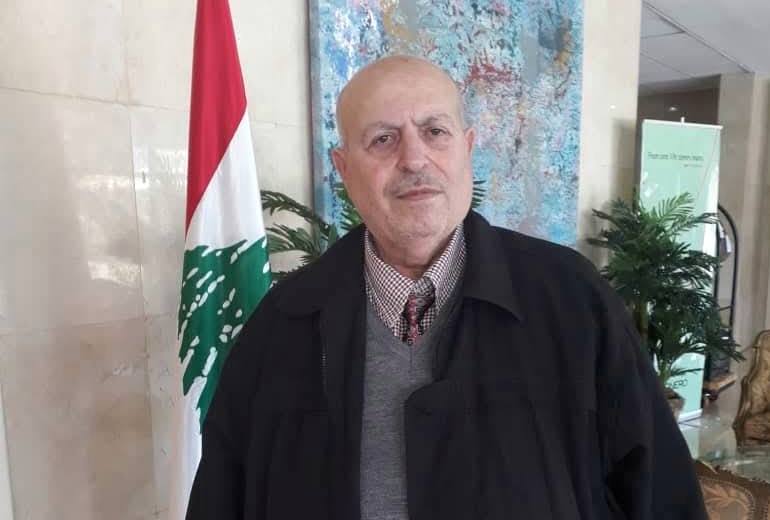
Maritime expert Ali Abu Omar emphasized that the entry of three international companies with investments into Syria in less than a year indicates the importance of Syria's location within regional and international trade routes. He added that Syrian ports serve as maritime gateways for neighboring landlocked countries such as Iraq and Jordan. These ports are also situated in the heart of the Middle East, overlooking the Mediterranean Sea, which is one of the world's most important maritime routes. This sea connects the Atlantic Ocean via the Strait of Gibraltar to the Red Sea via the Suez Canal, making ports located on its shores strategic hubs for maritime shipping and unloading.
Related : Three global investments in the Syrian maritime sector
From the moment of liberation until the end of August 2025, Syrian ports formed a key axis in maritime and commercial transport, and the port of Tartus had a distinguished role, as it received a total of 594 ships, including 485 general cargo ships. The amount of goods handled reached 3,670,540 tons, distributed between 3,039,008 tons of imports and 631,532 tons of exports. In addition, the port received 84 repair ships and 25 container ships carrying 4,373 containers, including 2,220 import containers and 2,153 exports.
As for the Banias oil port, during the same period it received 73 oil derivatives tankers with a total weight of 2,381,596 tons of goods, which confirms its strategic position as a vital facility to secure the country’s energy needs.
In the port of Arwad, maritime traffic was characterized by remarkable activity, as it received 212 ships and 206 ships departed. It also recorded 2,160 maritime work contracts and 60 ship maintenance requests, in addition to granting 15,000 sailing permits for fishing boats. The port witnesses regular daily traffic with the arrival of 40 boats and the departure of 40 boats daily, in addition to the passage of about 1,400 passengers daily.
Iyead Khalil , port of Arwad, Banias oil port , port of Tartus ,Ali Abu Omar , CMA CGM ,DP World ,Capt Nezar Abdalkrem Mohamad ,Khaled Jendi , Arab ports , Abu Dhabi Ports
You Might Also Like
Recommendation News
Yachts&Cruises
Warm welcome for “NORWEGIAN VIVA” at Alexandria Port 07 October 2025
Shipping Lines
GEODIS Ships firefighting helicopters between Spain and Chile- Video 17 December 2025
Ports
Circle Group wins €280,000 contract to digitize the port supply chain 26 December 2025
Shipping Lines
Saipem and Subsea7 announced the signing of a merger agreement 13 July 2026
Marine Tech
Partnership between Fincantieri and Enra Energy Solutions 14 October 2025