Syrian flag ranked third in the Mediterranean after the fleets of Greece and Turkey

Syria : : Iyead Khalil
Ship registration under the Syrian flag began in 1969 and varied from year to year, with the number of ships gradually increasing until it peaked in 1993 at 39 ships and 37 ships in 1996.. In 2004, the number of ships was reduced to only 15, bringing the total number of ships in the Syrian fleet to 350 and the data show an increase in the number of ships being written off, reaching a peak of 42 in 2008, then decreasing to 20 ships in 2009 and 16 ships in 2010. Currently, there are no ships flying the Syrian flag.
.A statement by Syrian officials
A statement by Syrian officials in 2024 revealed that Syria ranks second in the region in terms of the number of ship owners and workers in the maritime transport sector. The statements confirmed that there are 4,273 ships owned by Syrians currently sailing the world's seas – but all of them sailing under foreign flags.
Will Syria regain control of its merchant navy? We posed this question to three maritime transport experts in Syria.
The reasons for not registering under the Syrian flag (formerly)
In the beginning Maritime expert Captain Ali Abu Omar noted the reasons for not registering under the Syrian flag (formerly) to the circumstances at the time and the unjust economic sanctions that were imposed on Syria, which limited the ability of Syrian ships to call on a large group of international ports.
A strategic vision for the maritime transport sector,

Abu Omar stressed the need to develop a strategic vision for the development of the maritime transport sector, by exploring ways to simplify procedures and attract investors to this vital economic sector, which is rich in business, resources and opportunities, in addition to cooperating with customs and the central bank and working to achieve competitiveness with neighboring countries in maritime transport activities.
Syrian flag.It ranked third in the Mediterranean basin
Abu Omar indicated that the Syrian naval fleet, which numbered 350 vessels, was sailing under the Syrian flag. It ranked third in the Mediterranean basin after the fleets of Greece and Turkey, but between 2001-2010 the ship owners removed it from the records of the General Directorate of Syrian Ports and registered it under the flags of foreign countries (Georgia, Honduras, Malta, Panama, Jamaica, Cambodia, Saint Vincent, North Korea, Sierra Leone).
Why did the Syrians raise foreign flags on their ships?
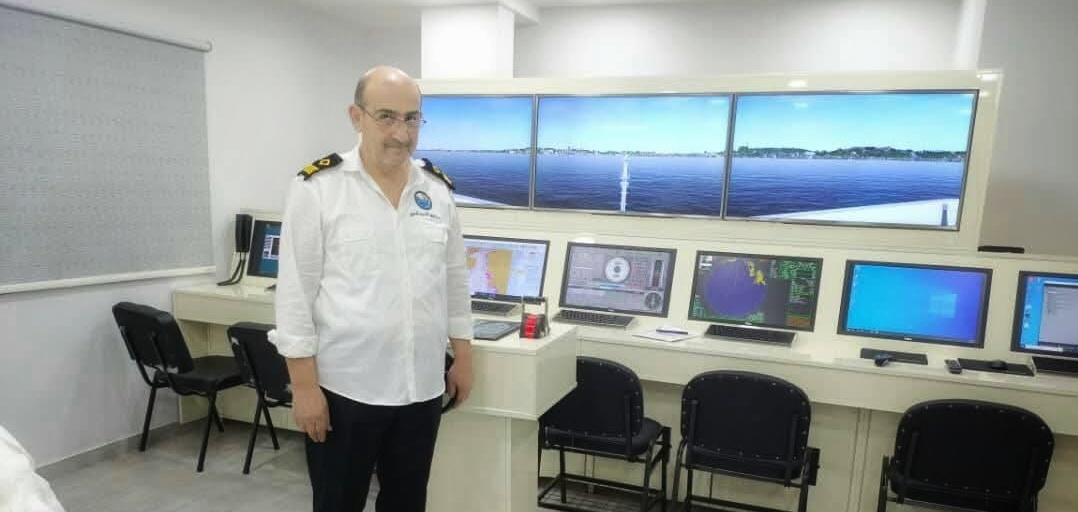
Captain Nizar Mohammed says that the reason for the decline in the number of fleet ships in recent years is government neglect, especially regarding ship registration and deregistration procedures, as these procedures remain complex and require lengthy transactions, numerous documents, and approvals from several entities. The General Directorate of Customs still considers the ship a commercial commodity subject to profit upon sale. What exacerbated the problem was subjecting ships to income tax on actual profits according to Law 24 of 2003 and its amendments in Law 60 of 2004.
Income tax on actual profits.
According to the law, the maritime transport profession is subject to income tax on actual profits. This means that every ship must keep accounting records and entries showing revenues and expenses during the year and submit written statements from the ship owner to the financial authorities. This is impossible because maritime transport prices are not fixed, cargo is frequently exposed to accidents that cost exorbitant sums that may exceed transport fees, and ship maintenance costs are also high. In addition, there are undisclosed expenses such as gratuities paid by the captain to port authorities.
Impossibility in verifying the accuracy of the figures
The aim is to expedite loading and unloading, but also because of the difficulty of securing accounting staff on every ship and the ship's distance from direct oversight by either its owner or tax inspectors. Conversely, there is a significant difficulty, bordering on impossibility in verifying the accuracy of the figures submitted to the financial with regard to expenses, the ship's captain can submit invoices from any international port for maintenance work that show the ship to be losing money throughout the year, especially from ports of developing
Successive administrations that bear responsibility

Meanwhile, maritime expert Captain Ali Idris emphasizes that the fundamental reason for the decline and escape of ships from the umbrella of the Syrian flag is not due to the current circumstances, but rather to the successive administrations that bear responsibility for that decline.
Decisions based on decrees dating back to the 1950s,
The fundamental reasons for this decrease in the number of ships registered under the Syrian flag are the lack of technical and administrative maritime expertise capable of assessing the condition of ships and granting maritime certificates related to maritime work. In addition to the lack of technical services such as maintenance and other services provided at ports, there is also the absence of repair docks in Syria, and the prohibition on establishing emergency maintenance workshops, not to mention a series of complex procedures imposed by the supervisory authorities and based on this is in addition to decisions based on decrees dating back to the 1950s, as well as the complexities inherent in customs laws related to maritime work.
Today Syrian enters a new phase of economic
With US President Donald Trump signing off on the cancellation of the “Caesar Act” sanctions, the Syrian Arab Republic enters a new phase of economic openness, restoring the vital role of land and sea ports in the movement of internal and external trade. The decision opens the way for the reactivation of land transit routes, the resumption of trade with neighboring countries, and the facilitation of the movement of essential goods. Previous sanctions on Syria led to the cessation of port and border crossing development projects, and caused ships to avoid registering under the Syrian flag.
Economic experts agree that with the lifting of restrictions, the country will witness the implementation of several plans to expand docks and land ports, develop inspection systems, activate electronic linking between border centers and the central administration, in addition to facilitating customs clearance, which will contribute to attracting new transport companies and restore confidence to local and international investors.
Related : Syrian ports are a " Magnet Point" for global investment today.
#“Caesar Act” sanctions #Syrian merchant navy # Syria flag #Captain Ali Idris # Captain Nizar Mohammed #Captain Ali Abu Omar noted
You Might Also Like
16 November 2025
Recommendation News

Shipping Lines
ABS Lashing Notation Provides Flexibility for Container Operators 15 October 2025

Shipping Lines
Sidsel Norvik announces : Nor-Shipping unveils partners for 2027 12 February 2026
Ports
Mawani and ARASCO sign SAR grain-logistics deal at King Abdulaziz Port 08 December 2025
Shipping Lines
Hapag-Lloyd and Maersk on Red Sea transit return for Gemini 27 November 2025