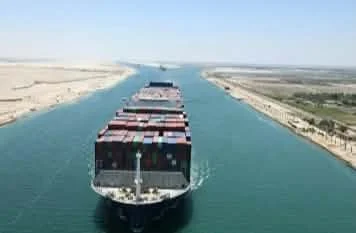
Ports already account for nearly 95 percent of India’s external trade by volume.
India’s rise as a maritime power is no longer a distant aspiration—it is unfolding in real time along the country’s 7,500-kilometre coastline. Ports that once served as quiet gateways for trade are now bustling engines of economic growth, handling ever-larger volumes of cargo and anchoring India’s ambitions of self-reliance and global competitiveness. Yet this expansion comes with a dilemma that can no longer be postponed: how to grow without irreversibly damaging fragile coastal ecosystems and accelerating climate change.
The answer emerging from India’s maritime policy playbook is clear—green growth is not a constraint on development, but its most durable foundation.
The challenge : Ports should expand
Ports already account for nearly 95 percent of India’s external trade by volume. Over the last decade, cargo handled at major ports has jumped from about 581 million tonnes to 855 million tonnes, a striking 47 percent increase. This surge reflects India’s manufacturing push, rising exports, and deeper integration into global supply chains. But ports are also concentrated sources of air pollution, water contamination, and greenhouse gas emissions, often located near mangroves, lagoons, coral reefs, and densely populated coastal cities. The challenge is not whether ports should expand, but how they do so.
The replacement of the colonial-era Ports Act of 1908
India’s evolving response marks a decisive break from the past. The replacement of the colonial-era Ports Act of 1908 with the Indian Ports Act, 2025 signals an institutional shift toward embedding environmental safeguards directly into maritime governance. Sustainability is no longer an add-on or pilot project; it is now a statutory expectation. This legal overhaul is complemented by long-term planning frameworks that explicitly link port expansion with climate responsibility.

India Vision 2030
At the heart of this transition lies the Maritime India Vision 2030, which identifies sustainability as a core pillar of maritime growth. It is supported by the Harit Sagar Green Port Guidelines, a detailed roadmap that sets measurable targets rather than aspirational slogans. Ports are expected to cut carbon emissions per tonne of cargo by 30 percent by 2030, electrify at least half their equipment, and source over 60 percent of their energy from renewables—benchmarks that would place India among global leaders in green port operations. Crucially, these targets scale up further toward 2047, reinforcing the idea that sustainability is a journey, not a deadline.
Re-engineering their energy systems,
What makes India’s approach noteworthy is that these goals are already translating into action on the ground. Several ports have begun re-engineering their energy systems, investing in rooftop and floating solar plants, wind installations, and cleaner fuels such as LNG. New Mangalore Port’s achievement of running entirely on solar power stands as a proof of concept, not an exception. It demonstrates that renewable energy adoption at ports is technically feasible, economically sensible, and operationally reliable.
The push toward electrification and cleaner operations
Equally significant is the push toward electrification and cleaner operations. Shore-to-ship power—allowing vessels to switch off diesel engines while docked—directly improves air quality in port cities and reduces carbon emissions. Electrified cranes, loaders, and vehicles cut noise pollution and operating costs while improving worker safety. These are not abstract climate benefits; they translate into healthier living conditions for communities that have long borne the environmental costs of port activity.
Water management and biodiversity protection
Water management and biodiversity protection form another critical pillar of the green maritime agenda. Ports consume vast quantities of freshwater and generate wastewater, oily residues, and dredged material. The emphasis on wastewater recycling, zero-liquid discharge, and reuse of dredged material for construction or shoreline protection reflects a broader move toward a circular economy. Expanding green cover through mangroves and plantations not only offsets emissions but also strengthens coastal resilience against storms and erosion—an increasingly urgent priority in an era of climate volatility.
The transition to hybrid and alternative-fuel vessels
Skeptics often argue that green mandates slow down growth or inflate costs. India’s experience so far suggests the opposite. Cleaner energy reduces long-term operating expenses, efficient resource use improves productivity, and safer working environments lower accident-related disruptions. Programs such as green ship incentives and the transition to hybrid and alternative-fuel vessels show how environmental performance can be rewarded through market mechanisms rather than enforced solely through penalties.
India’s international climate commitments
The broader significance of this transition extends beyond ports themselves. Maritime decarbonization supports India’s international climate commitments and strengthens its credibility in global shipping and trade negotiations. As supply chains increasingly value low-carbon logistics, green ports could become a competitive advantage rather than a regulatory burden. International partnerships on green shipping corridors, hydrogen hubs, and digital maritime systems reinforce this alignment between domestic reform and global cooperation.
Invests in clean technology,
Ultimately, the story of India’s green maritime push is not just about ports or ships—it is about redefining development itself. Economic growth that degrades oceans, displaces communities, and locks in high emissions is no longer viable, either morally or economically. By contrast, growth that internalizes environmental costs, invests in clean technology, and safeguards ecosystems builds resilience and legitimacy.
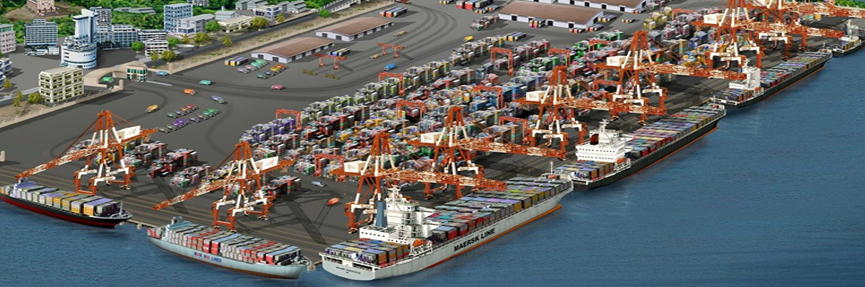
Indian ports are now better, smarter and more agile
It is noteworthy that Indian ports are now better, smarter and more agile, as the country continues its positive economic march. Currently, a total of nine Indian ports rank among the top 100 globally, up from just three in 2020.1 On an average, the container dwell time at Indian ports is now only 3 days as compared to 4 days in countries like the UAE and South Africa, 7 days in the USA and 10 days in Germany.2 India’s port capacity too has marked a notable increase—from 871.52 MMTPA in 2014–2015 to 1629.86 in 2023–2024.3
Related : Singapore port traffic rises in October as vessel and container volumes increase
Source : Press - Release
#Indian ports , Indian Ports Act #floating solar plants , #Maritime India Vision 2030 ,#Green Ports , #India’s Competitive Advantage
You Might Also Like
Recommendation News
Incidents
Cargo Ship collides oil tanker off UK coast, causing fire disaster ( Photos + Video ) 16 October 2025
Ports
Port of Brisbane driving higher productivity and freight vehicle innovation 26 March 2026
Incidents
Panama-flagged bulker Eternal Bright towed to safety in Çanakkale Strait 31 October 2025
Incidents
Harsh new penalties are being planned in France for shadow tankers. maritime tickers 10 April 2026
Marine Tech
ESA : Showcasing Space Applications for Maritime Decarbonisation 19 November 2025