The Polish government will allocate funds from the state budget for the development of the Pomeranian Cape in Świnoujście

Poland :Marek Grzybowski
Poland will spend PLN 3 billion on port development, infrastructure, and maritime education in 2026. This is 50 percent more than in the current 2025 budget, Arkadiusz Marchewka, Undersecretary of State at the Ministry of Infrastructure, informed the media.
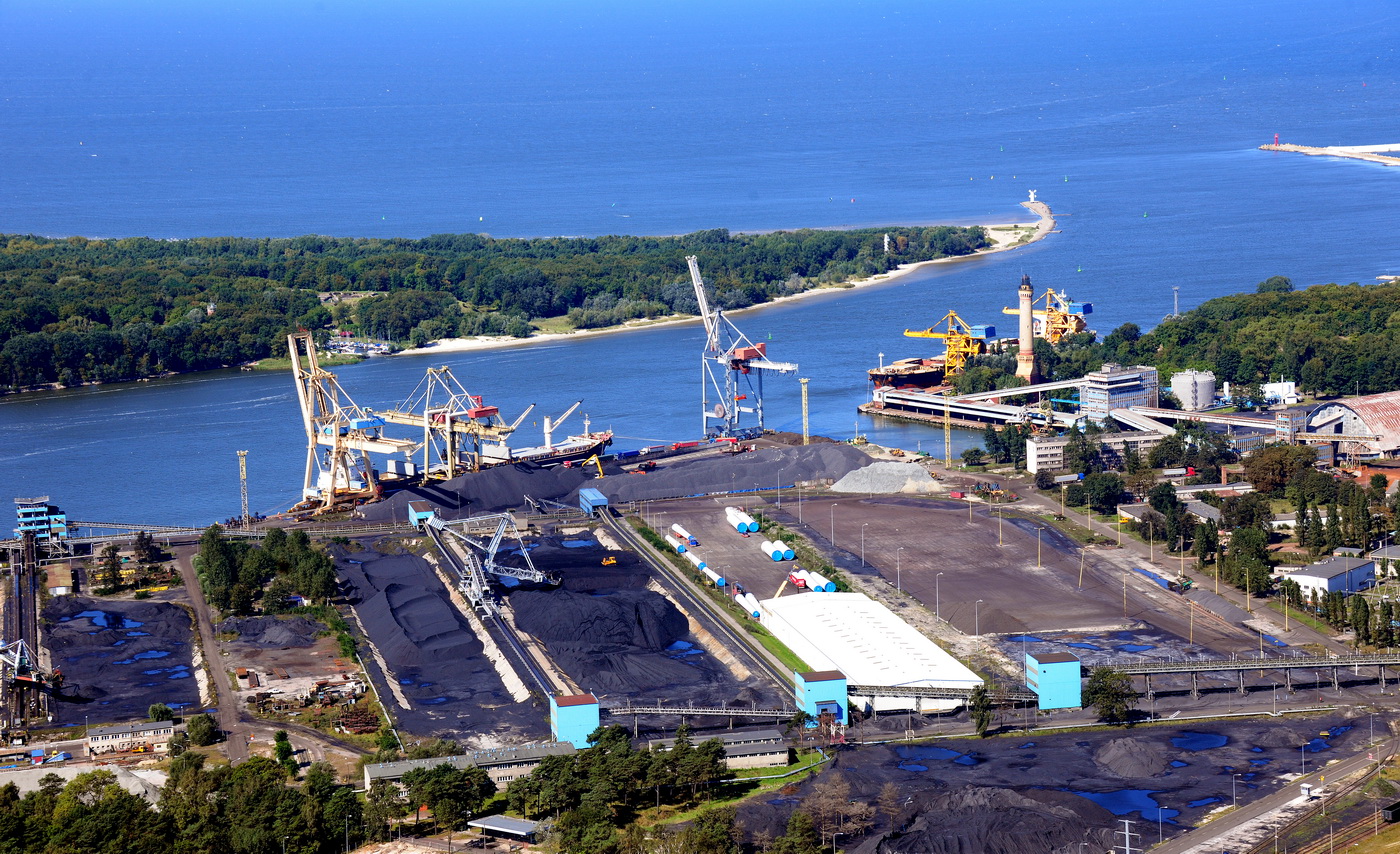
The Polish government will allocate funds from the state budget for the development of the Pomeranian Cape in Świnoujście and the construction of new ships for maritime universities. Funds from the Polish budget will be used to build infrastructure for the FSRU in Gdańsk and a pier for the Polish nuclear power plant, located 150 km west of Gdańsk.
A major program to develop the Polish Navy
The Polish government is financing a major program to develop the Polish Navy. The “Miecznik” program is being implemented in cooperation with a British company. Three modern guided missile frigates are being built for the Polish Navy at a gross cost of approximately PLN 14.8-15 billion. The frigates are being built at the Gdynia Naval Shipyard.
A beacon of innovation across the Baltic Sea region
A few months before the important fair BALTEXPO 2025 – where European Network of Maritime Clusters (ENMC) is proud to be a partner – it’s the perfect moment to spotlight one of the most innovative member clusters that exemplifies the dynamic maritime landscape of Central and Eastern Europe that this premier fair celebrates.
When most people think of Poland’s maritime industry, they envision the bustling ports of Gdańsk or the shipyards that have shaped the Baltic coastline for centuries. However, there’s a remarkable organization that has been quietly revolutionizing how Poland approaches both maritime and space sectors, creating an unprecedented dual-focus cluster that serves as a beacon of innovation across the Baltic Sea region and beyond.
The Baltic Sea & Space Cluster unique within the ENMC

The Baltic Sea & Space Cluster represents something truly unique within the ENMC – it’s the only member organization that successfully bridges the maritime and space industries, recognizing the profound interconnections between oceanic exploration and cosmic discovery that many overlook.
This distinctive positioning has allowed BSSC to develop insights and initiatives that wouldn’t be possible within traditional single-sector frameworks, making them an invaluable voice in Poland’s industrial strategy and a fascinating case study in cross-sectoral innovation.
The Acceleration Zone of the Pomeranian Special Economic Zone
The Acceleration Zone Demo Day was organized by the Pomeranian Special Economic Zone as part of the Startup Booster Poland – Smart UP initiative. During Demo Day, projects from companies selected for implementation during the first round of the acceleration program were presented. As part of the PSSE Acceleration Zone initiative, 14 acceleration agreements were signed. Startups received over PLN 5.4 million in grants for the implementation of innovative projects. Twelve additional projects were selected to begin pilot projects with leading technology recipients, shipyards, seaports, and other companies seeking innovation in their manufacturing and service operations.
The BalticSecurityPact, a strategic agreement
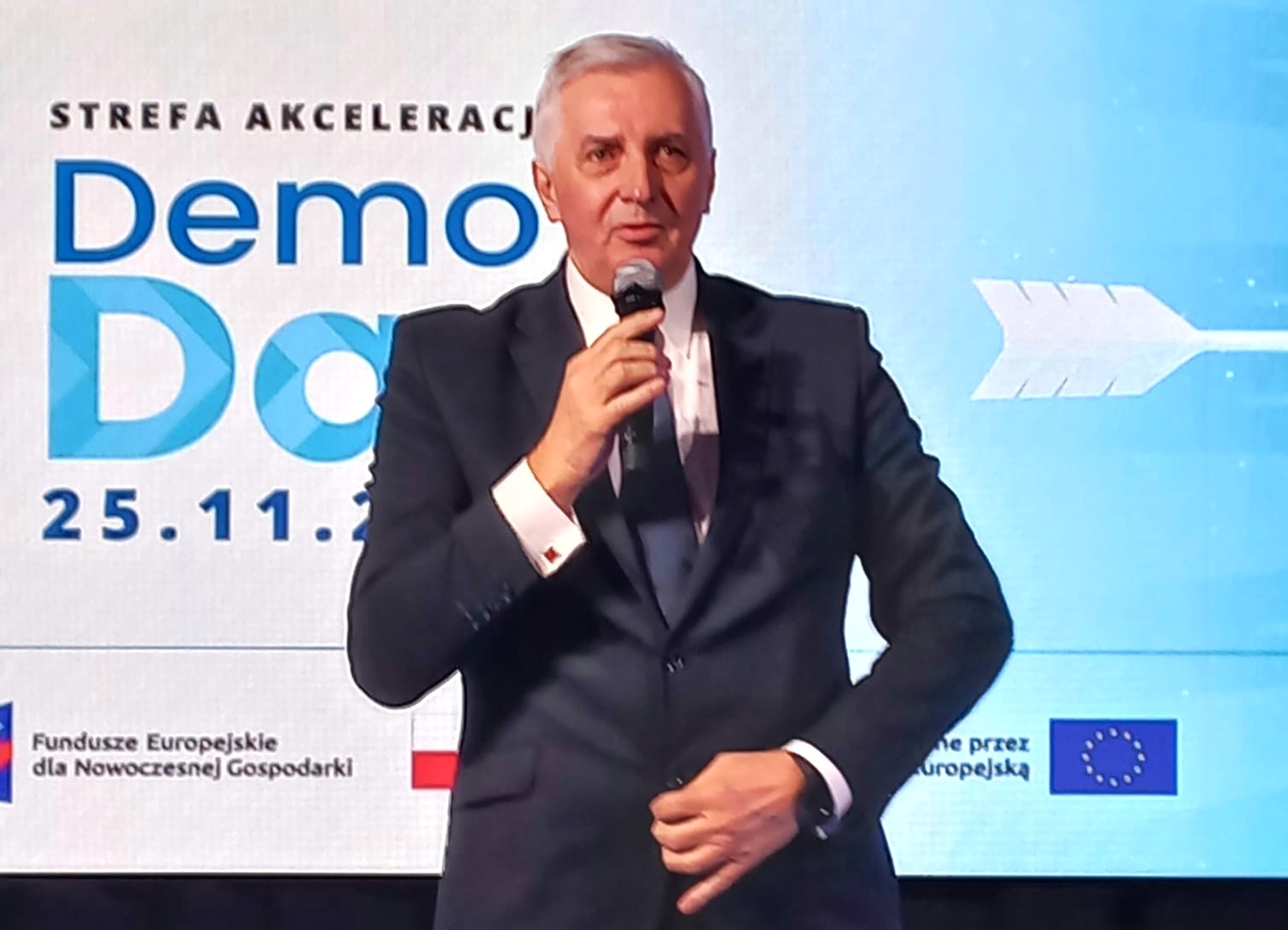
The BalticSecurityPact, a strategic agreement to strengthen the digital resilience of the Baltic Sea region, was signed during the BeSecure – Cybersec Conf conference in Gdańsk. “The development of new technologies has made cyberattack threats present at every level. As the Pomeranian Special Economic Zone, we accelerate companies that create solutions in the field of cybersecurity,” says President Mirosław Kamiński, Pomeranian Special Economic Zone.
In a world where technology is advancing faster than ever, digital security has become one of the key pillars of stable business development. Cyberattacks are no longer a threat “somewhere far away” — they affect every sector and organization, regardless of size.
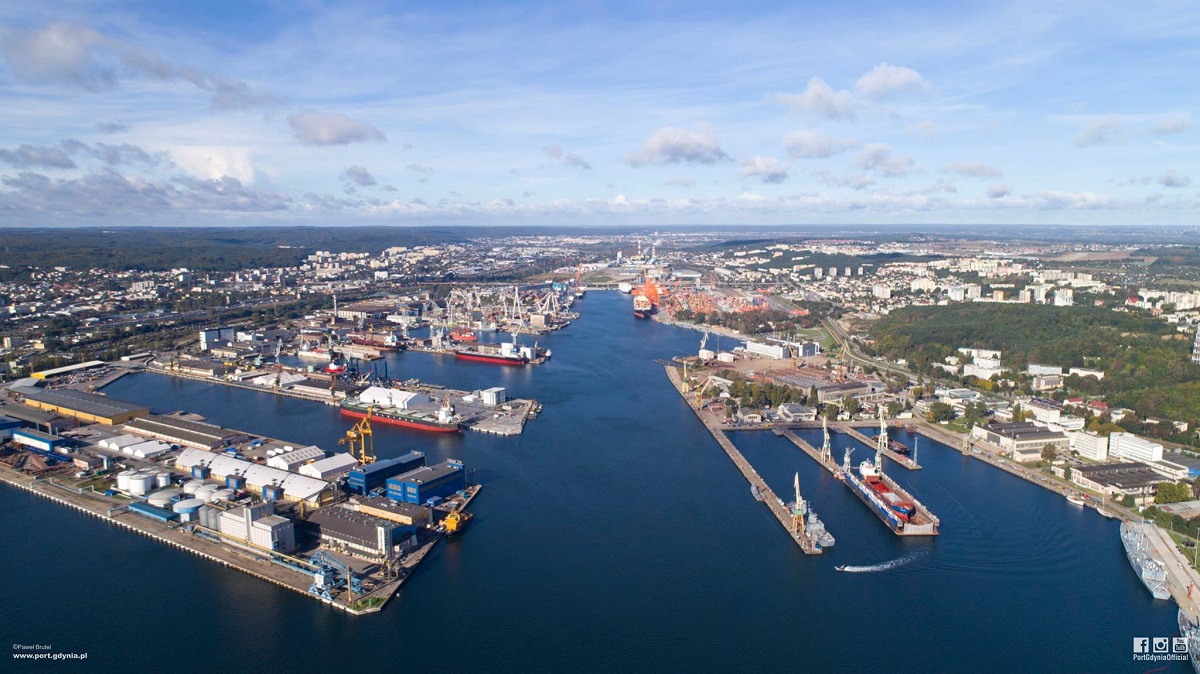
Port of Gdynia, OT Port Gdynia in the Finnlines Green Corridor
Finnlines celebrated six months of operation of the route from Hanko via the Port of Gdynia to Bilbao. The green corridor from Finland and Poland to the Iberian Peninsula is the Biscay line, operated by FinnLines ro-ro vessels. The regular service launched in June 2025. This weekly ro-ro service connects the Port of Gdynia directly with Belgium, the United Kingdom, Spain, and Finland. The vessel is operated at the OT PORT GDYNIA terminal.
The Biscay Line strengthens the connection between Northern and Western Europe. Finlines’ ro-ro service aligns with the European Union’s strategy of shifting cargo from road to short sea shipping. The service is dedicated to goods transported from Finland and Poland to and from Belgium, France, the United Kingdom, and Spain.
The economic mission of the Port of Gdansk
The economic mission of the Port of Gdansk was take place on November 27, 2025 in Tokyo. The Port of Gdansk handled over 59 million tons of cargo in the first three quarters of 2025. A significant increase was recorded in container transshipment – over 2 million TEU, representing a 21.7% increase compared to 2024. Transshipment of crude oil and liquid fuels accounts for approximately 50% of the total volume handled at the port. 2,667 commercial ships called at the Port of Gdańsk in the first three quarters of 2025. This was almost the same as the year before, but ships with a larger tonnage arrived in Gdańsk than in 2024.
Produce detailed bathymetric maps. AI models are implemented as custom GIS extensions
On the other hand Echogram S.C. developed a suite of AI-powered tools integrated into our GIS software environment to automate data processing and deliver high-quality results to our clients faster than ever before. Modern bathymetric survey methods generate massive point cloud datasets that require efficient and accurate processing to produce detailed bathymetric maps. AI models are implemented as custom GIS extensions, built in Microsoft .NET 6.0, and designed to streamline key steps in the workflow, including:
• Adding AI-generated text fields (metadata) based on existing attributes;
• Extracting map information and thematic layers and exporting them to SHP/DXF/ XML;
• Generating Python code for automated map labeling customization;
• Creating new AI-derived object layers using user interface prompts or XML metadata;
• Converting raster text to numerical or textual data for analysis.

Shipbuilding Industry
It is noteworthy that The M/F Jantar Unity ferry has completed shipyard work and technical acceptance. The vessel will carry cargo and passengers on the Świnoujście-Trelleborg route. The Remontowa Shipyard engaged Polish contractors to build the ferry. The Polish local content involved in the ferry’s construction included a number of subcontractors, including Marine Projects, Montex, Remontowa Shipbuilding, Holm, and Stal Complex. The M/F Jantar Unity is the first of three ferries being built in Poland. The vessel has a hybrid propulsion system. It uses four dual-fuel engines powered by LNG and diesel fuel for ignition.
The bow section of the frigate “WICHER” was delivered by pontoon from the CRIST S.A. shipyard to the PGZ Naval Shipyard. The bow section will be joined to the frigate’s hull in the closed hall of the Naval Shipyard in Gdynia. The frigate has been under construction since 2023. The ship will be launched in 2026. The Polish Navy is scheduled to receive the ship, ready for sea service, in 2029.
Related : Dr Dorota Lost-Sieminska talks About Shipboard HARASSMENT
#Jantar Unity ferry #Polish Maritime Cluster#Port of Gdynia # BalticSecurityPact #Mirosław Kamiński #Marek Grzybowski #Zone Demo Day # Pomeranian Economic Zone
You Might Also Like
Recommendation News
Incidents
Gulf of Guinea omitted from IBF-designated risk areas list 13 May 2026
Shipping Lines
Gulf Navigation Holding proposes repurchasing no more than 5% of its shares 18 December 2025
Ports
Antwerp chemical firms test water reuse 03 April 2026
More
Goblin shark: The mysterious predator of the deep ocean 25 December 2025
Incidents
Estonian navy detains Russia-bound oil tanker in Baltic Sea 16 October 2025