Flag changes, deactivation of identification systems, and jamming of satellite systems are triggering local consequences that could end in global catastrophe
Decarbonizing maritime transport and building green transport corridors will progress slowly
Maritime Tickers posed just three questions ( 3 What's ? ! ) to an elite persons in the maritime transport, ports, offshore, and logistics sectors. as a survey on the most important events of 2025 in the sector from his point of view, what events 2026 holds, and what he hopes will happen locally and globally in this vital strategic sector.
The Third exclusive Interview with Prof. Marek Grzybowski, president of the Baltic Sea and Space Cluster, President of the Board of the Polish Nautical Society, Director of the Baltic Sea Region Observatory.
What are the most important events in the maritime transport sector in 2025, in your opinion?
The 2025 United Nations Ocean Conference (UNOC3) was the most important event for the maritime society and this is an important event for the whole world. The event was organized by the UN and the governments of France and Costa Rica. It took place in Nice and began with strong appeals to accelerate action and mobilize all states and entities to protect and sustainably use the seas and oceans.
The previous appeals and actions of the UN have failed
The previous appeals and actions of the UN and leading maritime states have failed. Loud appeals and discussion panels end in conference rooms, and life in the oceans is disappearing. The destruction of the environment by people activity has reached an alarming pace. It is not only climate change that is causing life on 70% of our globe to disappear at an unprecedented rate. The predatory exploitation of the seas and coasts by humans, illegal fishing and environmentally destructive shipping, the development of infrastructure on the coasts, the massive littering of oceans, estuaries and coasts is an irreversible phenomenon.

Dynamically growing maritime trade
Dynamically growing maritime trade is driving the development of industrial infrastructure on the ocean coasts. Large ports and container terminals are emerging, handling millions of containers. Millions of tons of oil, gas, coal, and chemical products are transported along ocean routes.
Annual economic losses of up to $25 billion
The marine tourism market is developing dynamically, which also has a negative impact on the living environment of the oceans. Millions of motor yachts and thousands of tourist ships sail the oceans, reaching even the smallest bays and ports. Millions of tons of plastic float in the oceans, and fishing nets kill marine mammals, fish, turtles, and other marine creatures.
Illegal, unreported, and unregulated (IUU) fishing generates annual economic losses of up to $25 billion, leads to significant damage to aquatic life, and is linked to human rights violations.
The 𝗡𝗶𝗰𝗲 𝗢𝗰𝗲𝗮𝗻 𝗕𝘂𝘀𝗶𝗻𝗲𝘀𝘀 𝗙𝗼𝗿𝘂𝗺,
A comprehensive approach is needed. This was highlighted by representatives of the European Network of Maritime Clusters (ENMC) during the 𝗡𝗶𝗰𝗲 𝗢𝗰𝗲𝗮𝗻 𝗕𝘂𝘀𝗶𝗻𝗲𝘀𝘀 𝗙𝗼𝗿𝘂𝗺, which was a side event of the 2025 United Nations Ocean Conference (UNOC3). The main idea of the meeting was: “𝙀𝙪𝙧𝙤𝙥𝙚𝙖𝙣 𝘿𝙞𝙖𝙡𝙤𝙜𝙪𝙚 𝙤𝙣 𝙎𝙚𝙘𝙩𝙤𝙧𝙖𝙡 𝙄𝙣𝙣𝙤𝙫𝙖𝙩𝙞𝙤𝙣 𝙖𝙣𝙙 𝘾𝙤𝙡𝙡𝙖𝙗𝙤𝙧𝙖𝙩𝙞𝙤𝙣”. During the conference, attention was paid mainly to how the actions of governments, maritime clusters and maritime industries can reduce the negative impact on the marine environment and coasts. We must save the oceans where thousands of ships sail.
Maritime transport has been directly affected by geopolitical storms, terrorist attacks and the dynamically expanding grey and black fleets. Sanctions, tariffs, and trade wars increased the risk in global shipping in 2025. Merchant fleets have entered uncharted waters. Record-breaking fraudulent practices by shadow fleet operators have been recorded. Oil and gas price manipulation, tariff wars, and non-tariff wars will threaten global consequences.
Based on the "LR Global Maritime Trends Barometer" analysis of the implementation of new technologies within ports, it was concluded that “digital and environmental progress remains largely limited to advanced ports and port clusters”. On a global scale, the pace of development of innovative port infrastructure is still slow and customer expectations require the acceleration of innovation implementation.
Global catastrophe.
Flag changes, deactivation of identification systems, and jamming of satellite systems are triggering local consequences that could end in global catastrophe. But these are not the only plagues that could befall global markets. Global logistics storms are causing a tsunami in local markets in the EU, the United States, Africa, and Latin America. Asian countries have proven most resilient to tariff and non-tariff wars.
Events of 2026
What events do you expect or what do you predict will happen? for global maritime shipping in 2026?
The EU and the United States will continue to lose their competitive advantage in global markets, maritime transport and shipbuilding. Tariff and non-tariff policies, sanctions imposed on states, shipping companies, and ships will lead to the further development of shadow fleets and the smuggling of strategic raw materials and products such as rare earth elements, processors, and industrial electronics.
European shipbuilding industry
Today, we know that the European shipbuilding industry is struggling to survive in the shadow of the dynamic industries of China and South Korea. Asian shipyards are not giving up, and are even taking over entire sectors of activity previously reserved for European shipyards. Shipyards from Vietnam, India, and Turkey are also actively entering the market with their potential. And they do so without any inhibitions. Attempts are being made to rebuild the American shipbuilding industry. This will be a very expensive undertaking in 2026.
The dominance of Asian ports will continue in 2026. European Union seaports have been outside the top 10 global container ports in the Lloyd's List One Hundred Ports ranking for several years now. In 2025, ports on the Lloyd's List One Hundred Ports recorded a total transshipment about 750 million TEU.
The fight against the shadow fleet
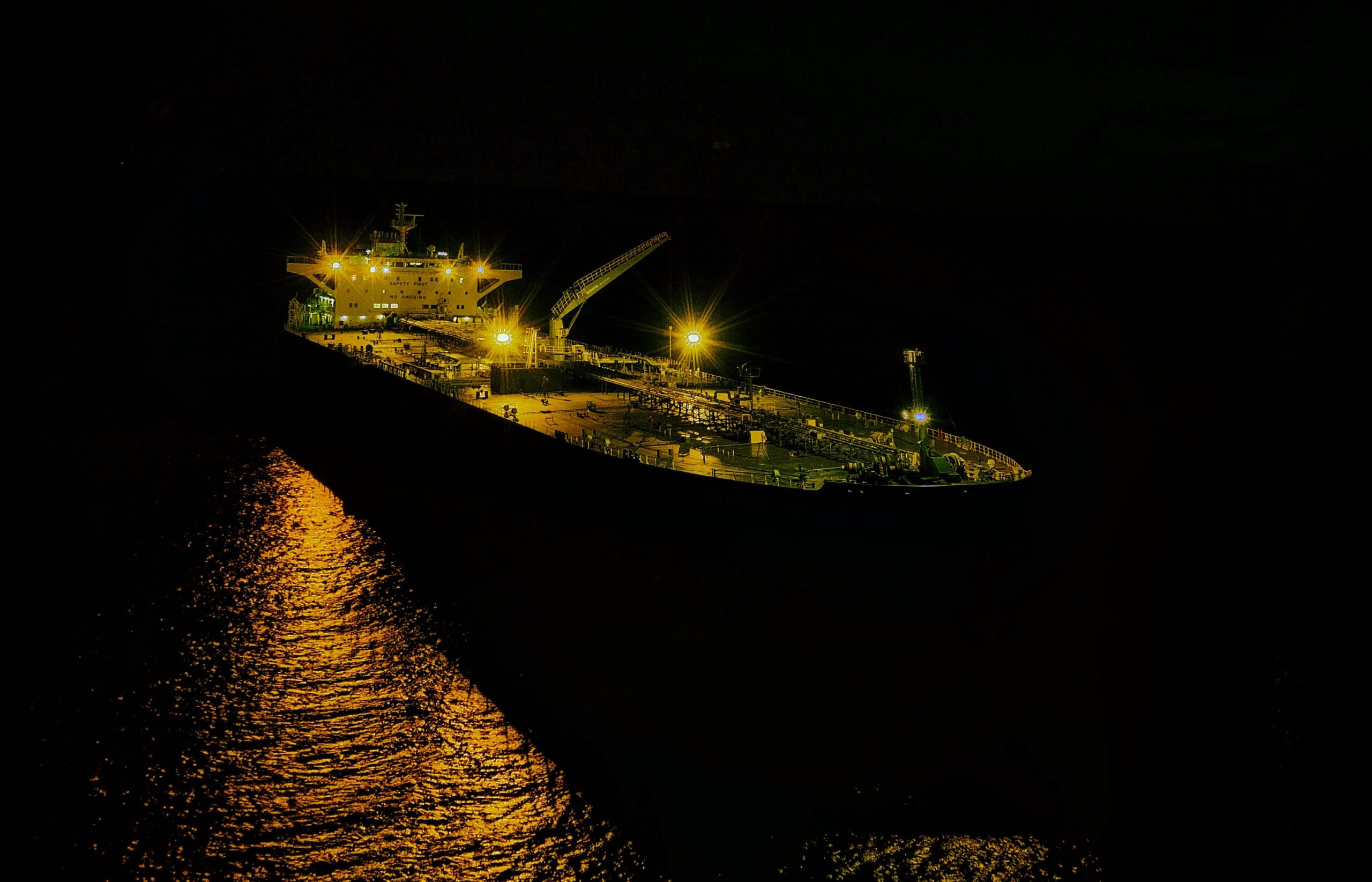
The administrations of the main countries will support the fight against the shadow fleet. Panama, Liberia, the Marshall Islands and Hong Kong will continue implemented comprehensive defence packages to the registration of ships under their flags and the management of their fleets. For example, after the outbreak of war in Ukraine, the Panama Maritime Authority (PMA) took decisive steps to protect the integrity of the world’s largest shipping registry, introducing strict legal measures targeting ships on international sanctions lists. The new regulations allow for the immediate cancellation of a ship’s registration and navigation licenses, significantly increasing Panama’s response to the growing global sanctions for illegal maritime activities.
A new era of global ocean governance,
The human main goal today is to shape a new era of global ocean governance, in which marine biodiversity, food security, and fair trade are intertwined, both at sea and on land. The future of the deep-sea fishing industry depends on transparency, compliance, and cooperation. Full implementation of the 2022 WTO agreement on harmful fisheries subsidies is essential. Tighter requirements for source control of seafood imports are also essential. The inclusion of restrictive social and environmental clauses in trade agreements is also advocated. Closer cooperation within coastal states and regional fisheries management organizations is also essential.
Hopes are possible
What do you hope will be achieved in the fields of ports, maritime transport, and logistics, both in your country and globally?
EU and USA operators will still holding our own in maritime tourism. But we’re losing ground in deep-sea fishing, farmed fish production, and seafood production. Shipbuilding, science, research and development, and maritime education are all developing at a good level. But even here, there’s clear activity from Asian countries, whose investments in science, research, and development clearly dominate in many areas. Automation and robotics, as well as the use of information and satellite technologies, are already clearly visible in the products of Asian countries, Japan, China, Vietnam, India, and others.
Global turmoil and local tensions in 2026.

Shipping, ports and logistics will operate under the pressure of global turmoil and local tensions in 2026. Protectionism, administrative barriers, political turmoil and changes in regulations, cyberattacks and direct attacks on ships, limited supply of highly qualified seafarers – these are the main threats to shipping in 2026. This will have a significant impact on the operations of ports and global logistics. The coming period is a time of uncertainty in global and local markets, in entire regions and in strategic hot spots.
The risk of direct attacks
The Baltic and Black Sea regions will be vulnerable to drone and missile attacks. Maritime transport and ports will be at risk of direct attacks and the destruction of critical information structures such as oil terminals, LNG ports, pipelines, and electrical and fiber-optic cables. Ships in the Red Sea and the Arabian Gulf will be at risk.
Ship crews will be vulnerable to kidnappings and terrorist attacks in the Gulf of Guinea and those straits where governments are unable to control waters and maritime trade routes.
Decarbonizing : Progress slowly
Decarbonizing maritime transport and building green transport corridors will progress slowly, as shipowners and port authorities recognize that this is a very expensive investment. Port authorities and shipping company managers expect clear financial support and tax breaks from governments. To achieve a credible trajectory towards net zero emissions by 2050, the maritime industry must address its challenges by translating commitments into concrete actions.
Alliances, clusters and industrial groups in the maritime industry will use their potential not only to build a competitive advantage based on costs and price competition. They will focus on implementing innovations, using new technologies, developing maritime business with the support of IT, AI, IoT, VR and satellite technologies, First of all.
All these activities require support with educational activities at the highest level. High quality of personnel in maritime logistics will be a basic and necessary condition for implementing new technologies and building a competitive advantage
Prof. Marek Grzybowski و (UNOC3) و Events of 2025-2026 , net zero emissions2050 , The Baltic and Black Sea , global ocean governance
You Might Also Like

Recommendation News

Marine Tech
ABS and Siemens Energy Launch Joint Development Project to Enhance Battery Safety 13 January 2026
Incidents
NTSB : Storm Caused Tugboat To Capsize Off Galveston-Texas 17 October 2025
Marine Tech
DNV Type Approval Design Certificate accelerates deployment of Econowind VentoFoils 17 July 2026
Marine Tech
Bureau Veritas supports Australia’s Defence Seaworthiness Project 01 November 2025
Shipping Lines
ICS admits Indian National Shipowners’ Association to full membership INSA 26 February 2026