A crucial step forward for the protection of migrant fishers if governments and employers act now, as they must
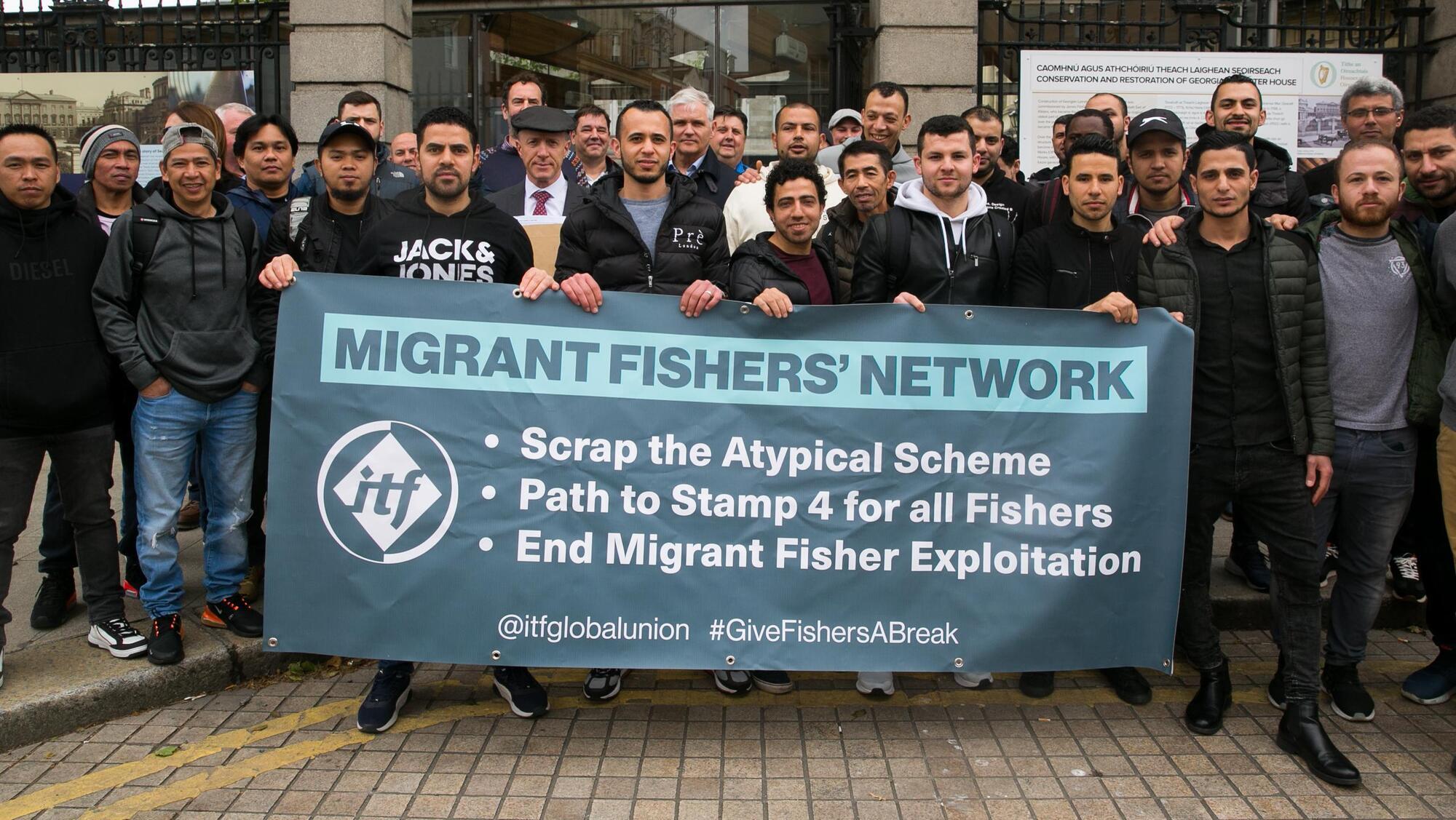
The International Transport Workers’ Federation (ITF) and the European Transport Workers’ Federation (ETF) welcome the adoption of the new ‘Guidelines for Fair Labour Market Services for Migrant Fishers’ by the International Labour Organization (ILO) in Geneva last week, calling the move a “crucial step forward” for the protection of migrant fishers worldwide,
The new Gudelines, jointly developed by representatives of governments, fishing vessel owners and fishers’ organisations, set minimum global standards for how migrant fishers should be recruited, employed and protected at sea. They draw extensively on previous work carried out by the European Fisheries Social Partners.
The protection of migrant fishers

“For too long, migrant fishers have been invisible in the global seafood industry – facing abuse and exploitation in their vital job of putting seafood on our plates. These are key workers that have been left without crucial rights,” said Johnny Hansen, Chair of the ITF Fisheries Section. Added : “This can be a crucial step forward for the protection of migrant fishers – but only if governments and employers act now, as they must.”
The Guidelines make clear that:
Migrant fisher recruitment must be free, fair and transparent
Contracts must be written and made available in languages migrant fishers understand
Migrant fishers must have decent working and living conditions
Migrant fishers must have access to justice
Implementing the Guidelines through national law and practice.
Once approved, the ITF and ETF are urging flag, port and labour-providing states to immediately begin implementing the Guidelines through national law and practice. This must include licensing and monitoring recruitment agencies, strengthening inspection systems, collecting data and ensuring access to grievance and redress mechanisms for fishers.
A game-changer on these issues
The ITF and ETF congratulate the UK for supporting the adoption of the Guidelines and noted the UK Government’s plan to establish a Fair Work Agency for the fisheries sector in April 2026.
“The UK’s planned Fair Work Agency can definitely be a game-changer on these issues, but only if it enforces the standards set out in the new Guidelines and has a remit in the fishing sector,” said Chris Williams, ITF Fisheries Section Coordinator. “That means fair recruitment, fair contracts, and genuine accountability for a sector reliant on migrant workers.”
An obligation to ensure those workers are recruited
The ITF and ETF are also calling on retailers, brands and seafood buyers to embed the Guidelines in their responsible sourcing frameworks.
“If your business profits from fish caught by migrant workers, you have an obligation to ensure those workers are recruited and treated fairly,” said Juan Manuel Trujillo, ETF Fisheries Section Chair. “The ITF and ETF will call out any company claiming to sell sustainable seafood if its supply chain relies on exploitation.”
The ITF and ETF stress that implementation must not remain voluntary or symbolic. Governments, vessel owners, and multinational buyers must all be held accountable for ensuring that migrant fishers are treated with dignity and fairness.
“These Guidelines are more than words on paper: they are a promise to the people who feed the world. It’s time for governments and employers to step up to make that promise real,” said Williams.
Related : ITF condemns forced disembarkation of fishers being held in Bushehr, Iran.
Source : Press - Release
#Juan Manuel Trujillo #ETF#ITF #Chris Williams #(ILO) #The new Gudelines #European Fisherie #Chris Williams #“crucial step forward” #Johnny Hansen
You Might Also Like

Recommendation News

Marine Tech
US Marines join the war against Iran to clear the Strait of Hormuz of planted mines. 16 March 2026
Seafarers
Italy : Unions on strike to support the fund of the exodus of dockworkers 30 November 2025
More
EU fishing fleet’s size shrinks, struggles with resource imbalances 29 April 2026
Shipping Lines
Maersk suspends FM1 and ME11 services amidst the security crisis in the Gulf. 07 March 2026