An additional 48,085 TEU could be trapped simply because vessels are running behind schedule.
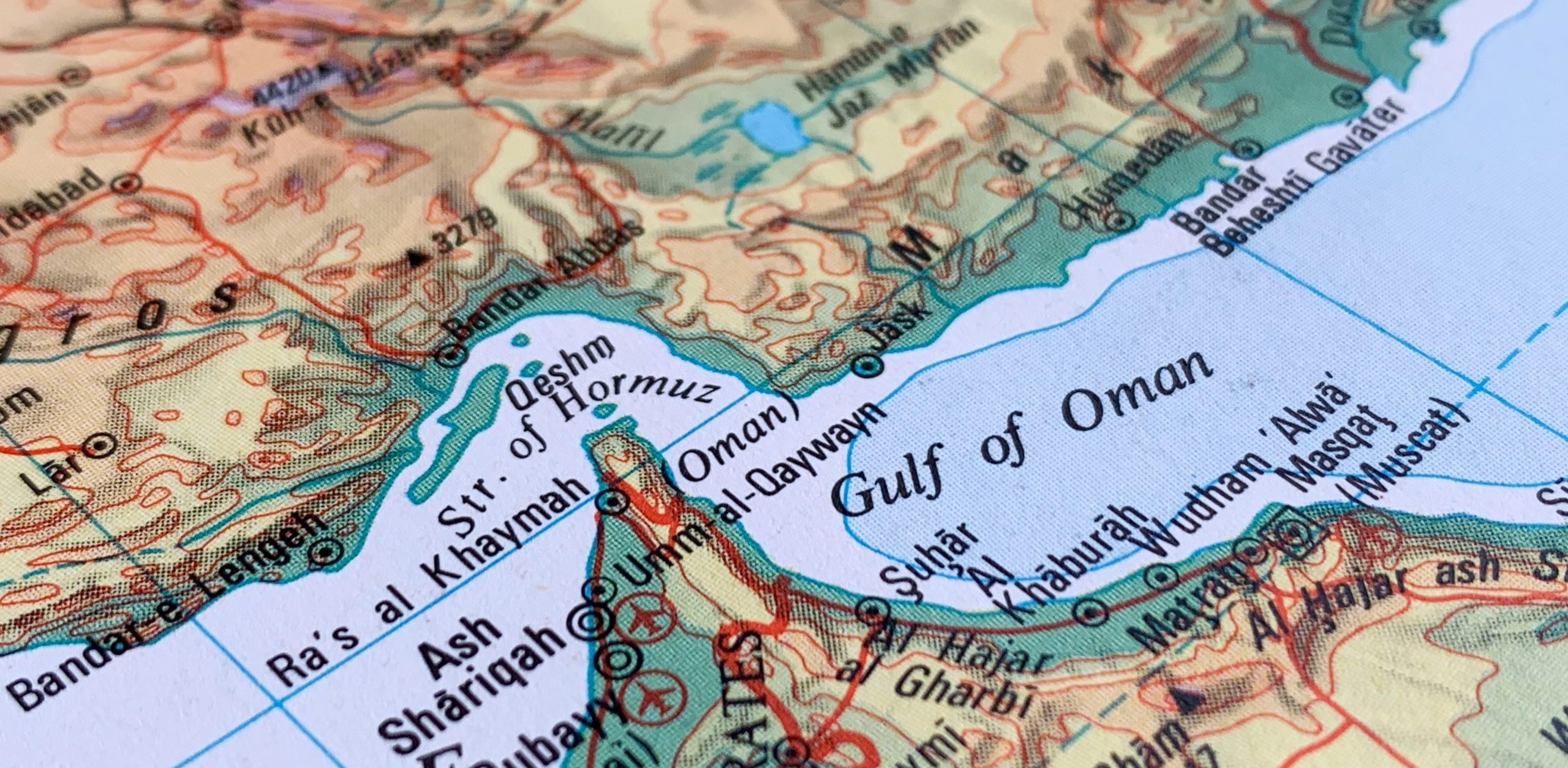
The Sea-Intelligence Sunday Spotlight issue 755 included a network stress test of the de facto closure of the Strait of Hormuz on February 28. The objective was to quantify the amount of deep-sea vessel capacity intended to leave the Persian Gulf while excluding any local feeder vessels not planned to leave the Gulf.
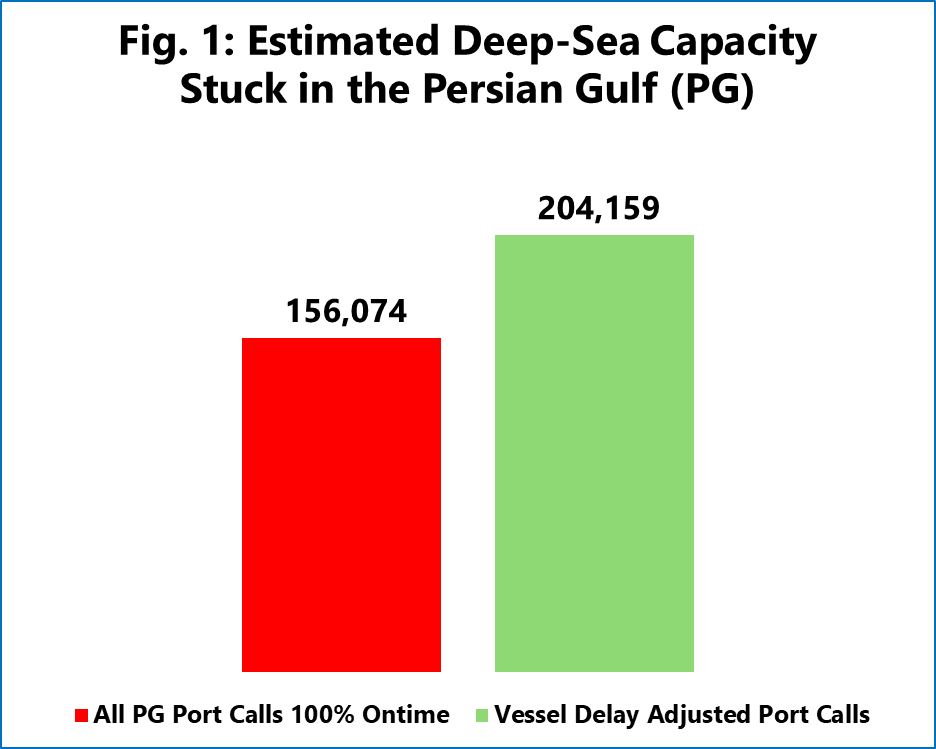
They calculated the potentially trapped capacity using carriers’ published schedules and applied them to two scenarios. In the "Baseline Scenario," which assumes that all deployed vessels operate with strict adherence to their published schedules and experience no delays, a minimum of 156,074 TEU of deep-sea capacity is potentially restricted.
The Adjusted Scenario
However, when historical vessel delay buffers are applied to reflect realistic operational conditions, the restricted capacity under this "Adjusted Scenario" increases significantly to 204,159 TEU. The difference between the two scenarios indicates that an additional 48,085 TEU could be trapped simply because vessels are running behind schedule. This shows how existing network inefficiencies can worsen the impact of geopolitical disruptions.
Related : Hormuz stoppage will impact cost of living according to UNCTAD
The broader deep-sea network
The broader deep-sea network is also subject to immediate secondary spillover effects triggered by a sustained closure. Vessels currently en route to the Persian Gulf will be forced to abandon their rotations, resulting in sudden cargo displacement at alternative transshipment hubs outside the chokepoint, such as Salalah, Colombo, and Singapore. This sudden diversion will cause yard density to spike, which will degrade terminal productivity and create berthing delays for mainline vessels on completely unrelated trade lanes.
Persian Gulf is a net-import region
Furthermore, since the Persian Gulf is a net-import region, these deep-sea services usually carry empty containers back to Asian manufacturing hubs. Simultaneously trapping over 200,000 TEU of capacity starves Asian export hubs of vital equipment, which could cause container shortages in the Far East.
About ; Sea-Intelligence
Sea-Intelligence is a leading provider of research, analysis, and data services for the global supply chain industry, with a primary focus on container shipping. Founded in 2011, it offers comprehensive industry data, market forecasts, and weekly analysis (such as the Sunday Spotlight) to assist stakeholders with actionable market intelligence
#Sea-Intelligence #Persian Gulf #"Adjusted Scenario"#Strait of Hormuz #Sunday Spotlight #deep-sea vessel
You Might Also Like

Recommendation News
Shipping Lines
Drewry : Suez Canal recovery squeezing LR freight rates amid ballooning fleet 25 November 2025
Ports
Rabie witnesses MoU with the Namibian Ports Authority 17 December 2025
Marine Tech
Fincantieri is poised to capitalize on Trump’s openness to foreign shipbuilding 18 August 2026
Incidents
Since 2024 : Pirates board tanker off Somalia in biggest escalation 07 November 2025
Incidents
European force seizes Iranian-flagged pirate boat 12 November 2025