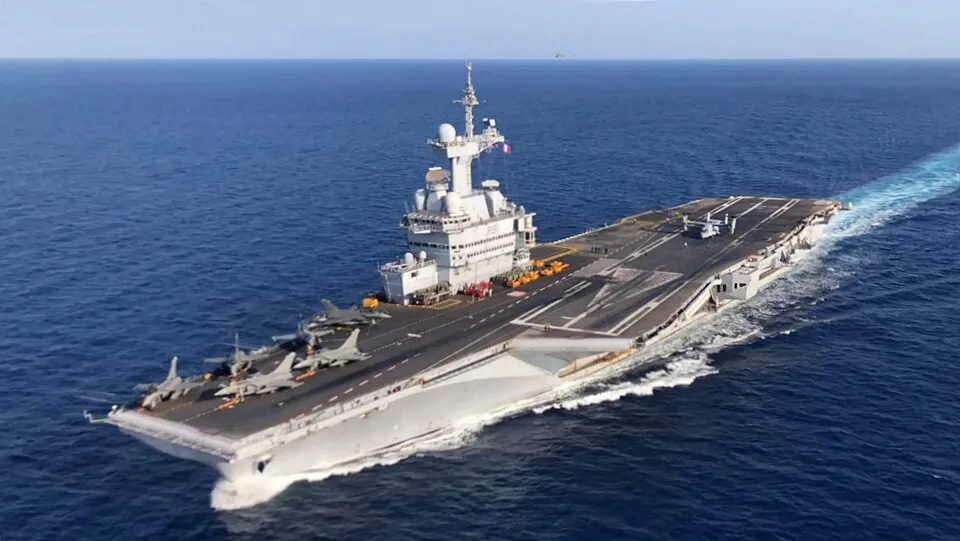
The future unit will replace the “Charles de Gaulle” from 2038, strengthening Paris' naval air capacity and industrial weight in the naval sector of Defence.
France's president confirmed the construction of a 78,000-tonne nuclear carrier capable of carrying 30 jets, with delivery projected for 2038. Emmanuel Macron announced that during a visit to French troops stationed at a military base in Abu Dhabi, near the Strait of Hormuz, one of the world's main maritime hubs for oil traffic.
The cost of the PA-NG
The PA-NG will cost €10 and €12 billion and be Europe's largest warship, backed by 800 firms. A new nuclear aircraft carrier that , will replace the Charles de Gaulle, operational since 2001, will have surpassed forty years of service currently the only ship of its kind in Europe, despite the fact that it is now a seaworthy vessel that is beginning to show some wrinkles. The project, known as the New Generation Aircraft Carrier (PANG), will result in the construction of the largest warship ever built in Europe and represents a cornerstone of France's naval and industrial strategy for the coming decades
The vessel will enter service around 2038
The vessel will enter service around 2038, when the Charles de Gaulle, operational since 2001, will have surpassed forty years of service. Despite ongoing upgrades, the current ship faces limitations related to its size, operational availability, and capacity to accommodate next-generation aircraft. Hence Paris's decision to focus on a much larger and more technologically advanced platform, capable of ensuring continued French naval air power into the second half of the century.
The future aircraft carrier
The future aircraft carrier will be approximately 310 meters long and will displace nearly 80,000 tons at full load, placing it well above the Charles de Gaulle and even the British Queen Elizabeth-class aircraft carriers. It will be powered by two next-generation nuclear reactors, a solution that will allow for extended periods of operation without refueling and greater operational availability compared to conventionally powered ships. Its maximum speed is expected to exceed 26-27 knots, while its total crew, including flight crews, will number approximately 2,000. While not as large as the US Gerald R. Ford-class carriers, the Pang will be among the most powerful in the world.
Related :Fincantieri Delivers New Naval Vessel to Indonesian Navy
The key element of the project
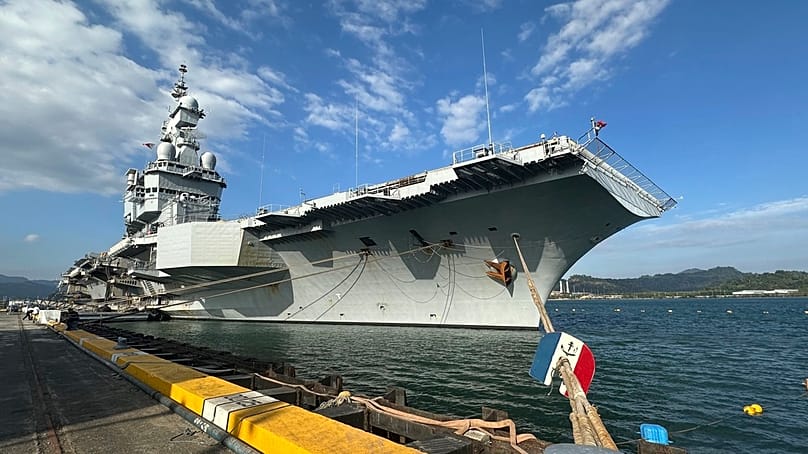
A key element of the project is the flight deck, designed to operate EMALS electromagnetic catapults and next-generation arrester systems. This will allow for the deployment of a broader and more flexible air component, comprising carrier-based fighters, early warning aircraft, helicopters, and, ultimately, combat and surveillance drones. The new ship will be designed from the outset to integrate unmanned systems and future naval aviation developments, including the carrier-based version of the next-generation fighter that France is developing as part of European programs.
The Pang a major industrial project.
The Pang promises to be a major industrial project. Naval Group will serve as prime contractor, with Chantiers de l’Atlantique involved in the construction of the hull and main structures. The ship's construction will require over a decade, spanning design, construction, and systems integration, with a significant impact on employment and the French industrial sector, particularly in the shipbuilding, nuclear energy, and combat systems sectors.
A significant investment
The overall cost of the program that includes development, construction, and initial logistical support. This is a significant investment, but one that Paris considers strategic not only militarily, but also industrially and technologically. The new aircraft carrier will consolidate France's role as the only European power with a nuclear-powered naval air capability. In a context marked by growing maritime tensions and a renewed focus on shipping security, the PANG will ensure Paris's ability to operate autonomously, with a credible and continuous presence in major crisis theaters. For the European shipping and naval industry, the program also represents a technological testbed, destined to set new standards in the design and construction of large, highly complex military vessels.
Plans for the new carrier in 2020

It is noteworthy that Macron originally touted plans for the new carrier in 2020. The Charles de Gaulle, commissioned in 2001 after 15 years of planning and construction, is France's only aircraft carrier and the sole nuclear-powered carrier outside the US Navy. The vessel has been central to French NATO operations, participating in missions from Afghanistan to operations against the so-called Islamic State group in Syria and Iraq.However, the carrier has faced recurring technical issues throughout its service life, including propeller problems that required multiple refits, and has spent significant periods in dry dock for maintenance.
Related : Bureau Veritas supports Australia’s Defence Seaworthiness Project
Source : Agencies
French NATO operations , Emmanuel Macron , Nuclear aircraft carrier ,largest military vessel ,Europe , Charles de Gaulle , The Pang ,Naval Group
You Might Also Like

15 October 2025

Recommendation News
Shipping Lines
Two Qatari tankers have cancelled their crossing of the Hormuz 06 April 2026
Yachts&Cruises
The new cruise ship for the SeaDream Yacht Club, arriving in 2029, will be built in China 04 September 2026
Incidents
Italy : Three container seizure in Augusta coming from China 16 October 2025
Shipping Lines
Sallaum Lines Signs New Order with China Merchants Shipyard 29 July 2026
Shipping Lines
Maersk appoints Charles van der Steene as its new Managing Director for the IMEA region 24 January 2026