Every oil spill is not just a financial burden but an ecological debt no one will ever repay.
By : Adam Laabs
Rolbatch technical director, Co-Founder w Rolbatch Laabs Academy,
Marine and Ocean Protection Technologies , Axtora Energy Co-Founde
The world has entered an era in which technology evolves faster than institutions can comprehend, and geopolitics reshapes global security dynamics faster than regulators can respond. At sea, events are unfolding that the foundations of modern maritime law never anticipated. Meanwhile, the very organizations responsible for protecting the oceans continue to operate according to the logic of a world that no longer exists a world that was stable, predictable, and in which the greatest threat was mechanical failure, while an oil spill was regarded as an exceptional anomaly. Today, the opposite is true: the threats are new, the regulatory structures are outdated, and the global system has become so deeply trapped in historical procedures that it can no longer keep up with even the most obvious environmental realities.
The contemporary landscape seems paradoxical.
This is why the contemporary landscape seems paradoxical. The technology capable of stopping an oil spill in the first minutes of a disaster already exists. It can be deployed from drones, stored in onboard containers, and used in real sea conditions high waves, variable salinity, strong wind. And yet the system does not want it. The system prefers to remain in the framework of the 1980s and 1990s, as if unaware that we have entered a new era of threats: the era of kamikaze drones striking tankers, of hybrid warfare on major shipping routes, of missile attacks on commercial vessels, and of deliberate sabotage of underwater infrastructure.
The most shocking of allthe
Look at the Red Seatankers attacked by Houthi forces, ships carrying oil and chemicals engulfed in flames, incidents that in any other sector of the global economy would be treated as emergencies of the highest order. In the Black Sea, we see surface and underwater drones striking vessels in ways regulators never envisioned. The Baltic has witnessed the sabotage of submarine pipelines and cables, exposing vulnerabilities that current standards cannot address. And yetand this is the most shocking of allthe global maritime safety system has not revised its core expectations. It still mandates granular sorbents that sink before they do their job. It still does not require immediate-response prevention systems onboard high-risk vessels. It still judges vessels “safe” if they meet standards written for the pre-digital world.
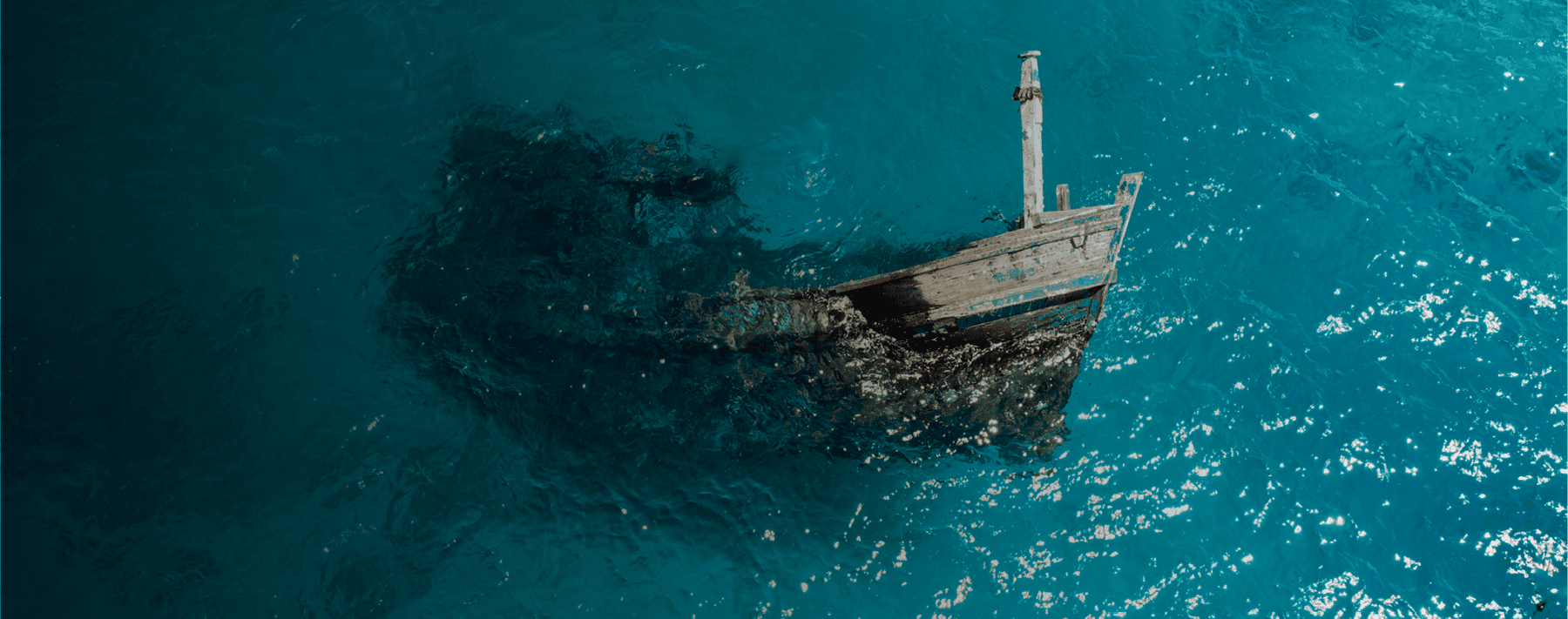
Maritime disasters are not predictable
The world moves forward; the regulations stand still. This structural paralysis means that maritime disasters are not just predictable they are, in practice, legal. Not because anyone explicitly permits them, but because the law does not require anything that could prevent them. If the law allows high-risk vessels to sail without modern prevention systems, then it does so knowingly. If governments refuse to impose new obligations, they do so with full awareness of the consequences. If international institutions spend years debating MARPOL revisions, they may as well debate the weather the practical outcome for the ocean is identical.
The idea of implementing new technologies
Whenever the idea of implementing new technologies arises, a ritual of excuses follows. Regulators insist they “must have certainty” that new solutions are safe. Shipowners argue that “there is no requirement,” and obligations would introduce costs. Insurers claim they “lack historical data” to include new technologies in their risk models. Environmental NGOs focus on issues that generate dramatic imagery because prevention cannot compete with photos of burning tankers and blackened coastlines. Each argument sounds plausible in isolation, but together they form a picture of a system paralyzed by institutional inertia and political convenience.
Modern prevention technologies
This is why modern prevention technologies such as Aqua Guard remain underused. Not because they don’t work. They do. Not because they are too expensive. They are cheaper than emergency response and exponentially cheaper than long-term ecological remediation. Not because the world is unaware of them. But acknowledging them would be admitting that the existing system is fundamentally inadequate. And nothing frightens institutions more than confronting the scale of their own long-standing failure.
Technology marches forward.
Meanwhile, technology marches forward. Satellites detect micro-spills within minutes. Algorithms track vessel routes and can forecast risk with growing accuracy. New absorbent materials function at speeds and efficiencies unimaginable two decades ago. Automatic deployment systems can react instantly. Everything needed to redefine maritime response already exists. The only missing piece is the decision the single decision that would transform prevention from an “optional enhancement” into a global requirement.
One institution could change everything
One institution could change everything by saying: every high-risk vessel must carry mandatory prevention systems. One regulatory body could declare that sinking granules cannot remain the safety standard of the 21st century. One government could pressure the IMO to mandate modern technologies. One insurer could reward prevention instead of merely compensating for damage. But none of this happens. Because everyone is waiting for someone else

A world that continues to look away.
The IMO waits for governments. Governments wait for shipowners. Shipowners wait for insurers. Insurers wait for historical data. NGOs wait for media attention. Media wait for emotional images. And the oceans wait for a world that continues to look away.
Instead of discussing how to prevent disasters, the world analyzes their consequences. Instead of establishing new prevention standards, it publishes reports about incidents. Instead of modernizing the system, it clings to rules written before the internet, satellites, and the geopolitical reality of hybrid conflict. The absurdity is staggering but so normalized that it appears almost natural.
Every oil spill
The consequences, however, are brutally real. Every oil spill is not just a financial burden but an ecological debt no one will ever repay. Oil sinks into the seabed, embeds itself in coral reefs, disrupts phytoplankton activity, alters local climate processes, and destroys entire food chains. These are not problems that fade after a few weeks. They last decades.
If the global community continues operating within the logic of reaction instead of prevention, maritime disasters will become part of the landscape rather than exceptions. Repeating that “these tragedies happen” will become a justification for inaction rather than a statement of fact.
Prevention is not a luxury
This is why the shift must be not only technological, but intellectual. Prevention is not a luxury it is a moral, economic, and systemic obligation. We must speak openly about this, because without public pressure, the system will never change. We must trigger a debate that reaches regulators, shipowners, insurers, and the informed public.
Related : Adam Laabs writes Again, a Disaster
Adam Laabs , The Age of New , Threats , The Age of Old Regulations , maritime safety system ,Red Seatankers , Automatic deployment systems ,Algorithms track vessel
You Might Also Like

Recommendation News

Marine Tech
ABC Delivers 50th DZ Engine for Damen’s CF3850 Short-Sea Freighter 18 March 2026
Marine Tech
John McDonald Appointed ABS Chairman and CEO 11 November 2025

Marine News Room
Our Ocean Will Be Impacted by Another Trump Administration 24 October 2025
Marine Tech
Fincantieri and Saudi Arabia sign agreement for new maritime partnerships 30 October 2025