Jamal OthmanTo " Maritime Tickers " :The meeting addressed important topics including strengthening mechanisms for achieving sustainable transport, including digitalization and facilitating digital trade
Syria : Iyead Khalil
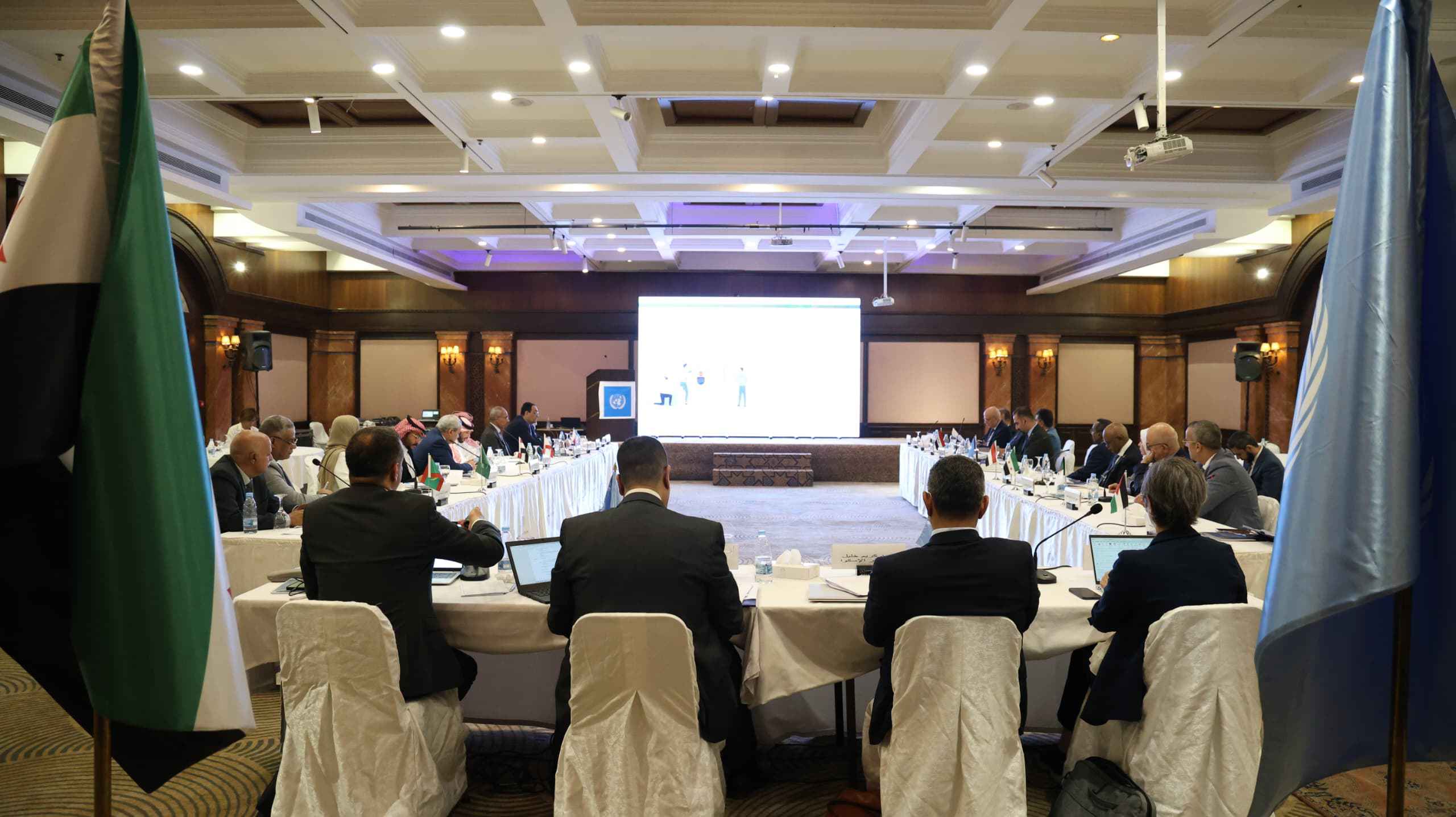
ESCWA holds its meeting in Syria the 26th session of the Transport and Logistics Committee of the United Nations Economic and Social Commission for Western Asia (ESCWA) kicked off in Damascus today, with the participation of senior officials and representatives of transport ministries in Arab countries, in the first UN event hosted by Syria in this sector in more than fifteen years.
Digitalization and sustainable transport issues are on the agenda
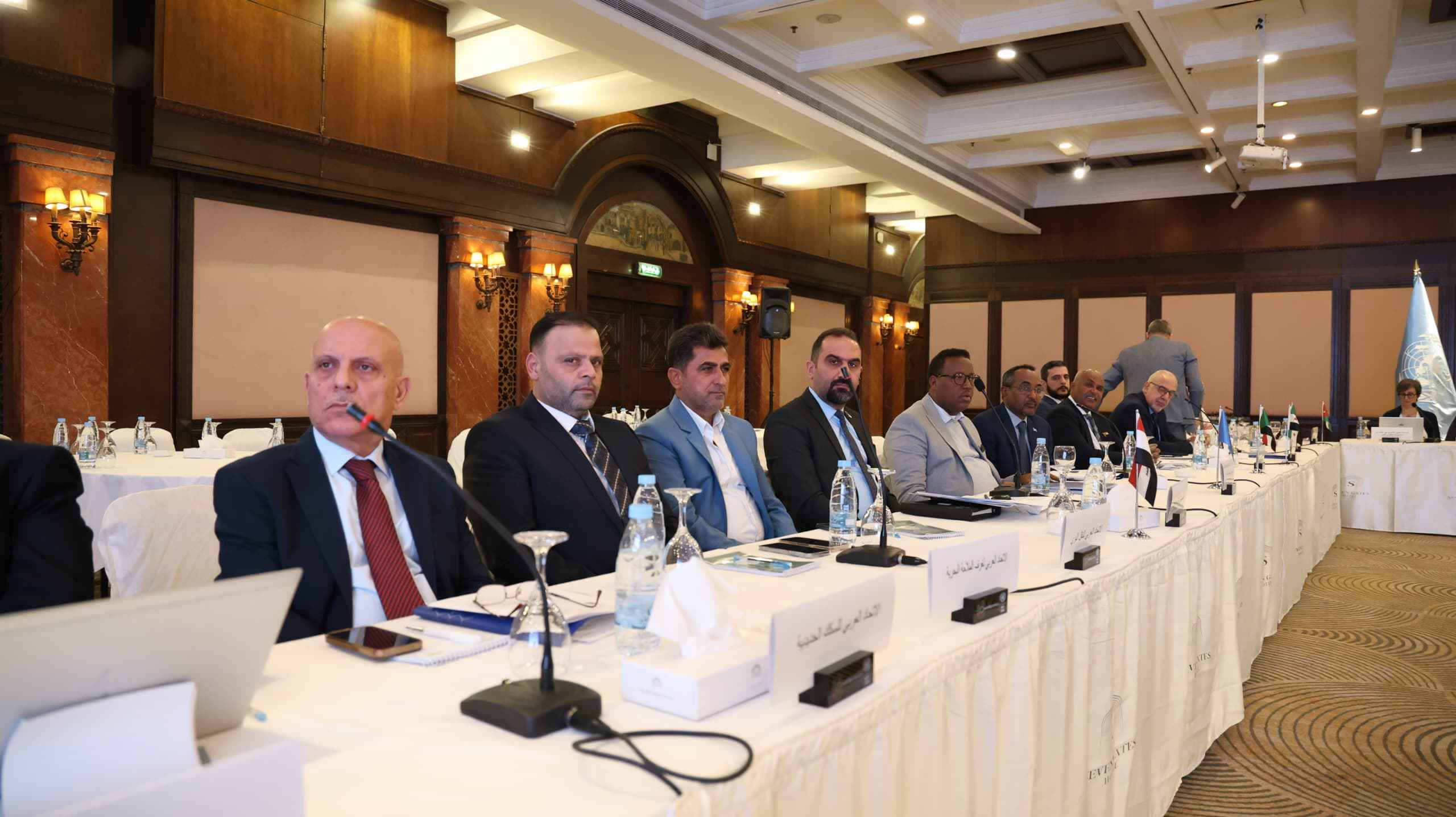
The committee, which met over two days at the Seven Gates Hotel in Damascus, discussed several agenda items, including facilitating digital trade, digitalization supporting sustainable transport, and the impacts of climate change on the transport sector in the region. It also reviewed Syrian proposals related to documents submitted by ESCWA and formulated new visions aligned with the priorities of the Syrian Ministry of Transport in the coming phase.
In his opening remarks, Minister of Transport Ya'rub Badr emphasized the importance of Damascus hosting this session, given its pivotal role in bolstering regional cooperation. He also highlighted the city's historical significance as a hub for movement and trade throughout the ages.
Badr noted that the transport sector is a vital artery of the economy and a cornerstone of regional integration. He then outlined the challenges facing Syria and the region, particularly reconstruction, infrastructure modernization, and the adoption of smart and digital technologies.
Badr highlighted the importance of the regional agreements that ESCWA is working on in the areas of roads and railways, standardization, and facilitating border procedures. These agreements contribute to building an interconnected transport system among Arab countries and transforming the region into advanced logistics hubs.
Regional Cooperation at the Heart of Participating Delegations
On the other hand , the Assistant Undersecretary for Land Transport Affairs at the Qatari Ministry of Transport, Engineer Hamad Issa Abdullah, emphasized the importance of Syria hosting this session. He noted the progress achieved during his country's presidency of the 25th session in strengthening regional cooperation in transport and logistics, and in keeping abreast of global developments in artificial intelligence, intelligent transport systems, road safety, land transport legislation, hazardous materials transport, and railways.
Abdullah pointed out that the current agenda addresses digital trade, green transport, the impact of land transport on climate, the implementation of the UN Decade of Sustainable Transport 2026-2035, and improving accident data. He affirmed his country's aspiration for continued regional cooperation and the integration of land, sea, and rail transport networks.
For his part, ESCWA Secretary Karim Khalil explained that holding the session in Damascus has a special significance, given the city’s historical role as a center of trade and a crossroads for regional routes. He pointed to the radical transformations taking place in the transport sector, represented by three main waves: digitalization, sustainability, and data. He stressed that digitalization has become a key axis in shaping supply chains, while sustainability is essential for protecting infrastructure, and data is the basis for decision-making in the transport sector.
Arab Vision 2045 and the Integrated Transport System
Khalil pointed out that the “Arab Vision 2045” provides a framework for building an integrated Arab transport system that supports development in the region, emphasizing that transport has become a key driver of economic integration.
Launch of the UN Sustainable Transport Programme 2026-2035
As ESCWA’s Economic Affairs Officer, Adel Al-Ghabri, explained, the meeting represents a significant milestone, particularly as it coincides with the launch of the UN Sustainable Transport Programme 2026-2035, which serves as a roadmap for developing countries to achieve sustainable and efficient transport, taking into account social and environmental dimensions and future challenges.
Al-Ghabri expressed his hope that holding the meeting in Damascus would be a step towards strengthening cooperation, noting that the topics on the agenda include digitalization, transport services, infrastructure, disaster preparedness, and investments in the transport sector.
The election of the committee's bureau members
The committee sessions will include the election of the committee's bureau members, a review of the agenda and organizational matters, follow-up on the implementation of the recommendations of the 25th session, and discussions on updates related to the transport and logistics sectors. There will also be sessions dedicated to facilitating digital and sustainable trade, the role of digitalization in promoting green transport, the impact of climate change on transport systems, and improving mechanisms for collecting traffic accident data.
It is noteworthy that that the 25th session of the committee was held last year in the Jordanian capital, Amman, on November 26 and 27, and discussed developments in transport and logistics in the region, including cybersecurity, transport, food security, and the impact of the Red Sea crisis.
Participation of the Syrian Maritime Chamber
The Syrian Chamber of Shipping participated in the 26th session of the Committee on Transport and Logistics of the United Nations Economic and Social Commission for Western Asia (ESCWA), held in Damascus on November 25 and 26, after an absence of nearly 15 years.
The Chamber's participation was in its capacity as representative of the Arab Federation of Chambers of Shipping, pursuant to an official mandate issued by the Federation. The meeting addressed important topics including strengthening mechanisms for achieving sustainable transport, such as digitalization and facilitating digital trade, in addition to implementing ESCWA's work program activities, recommendations from the Committee's previous session, and other related matters.
Related : Three global investments in the Syrian maritime sector
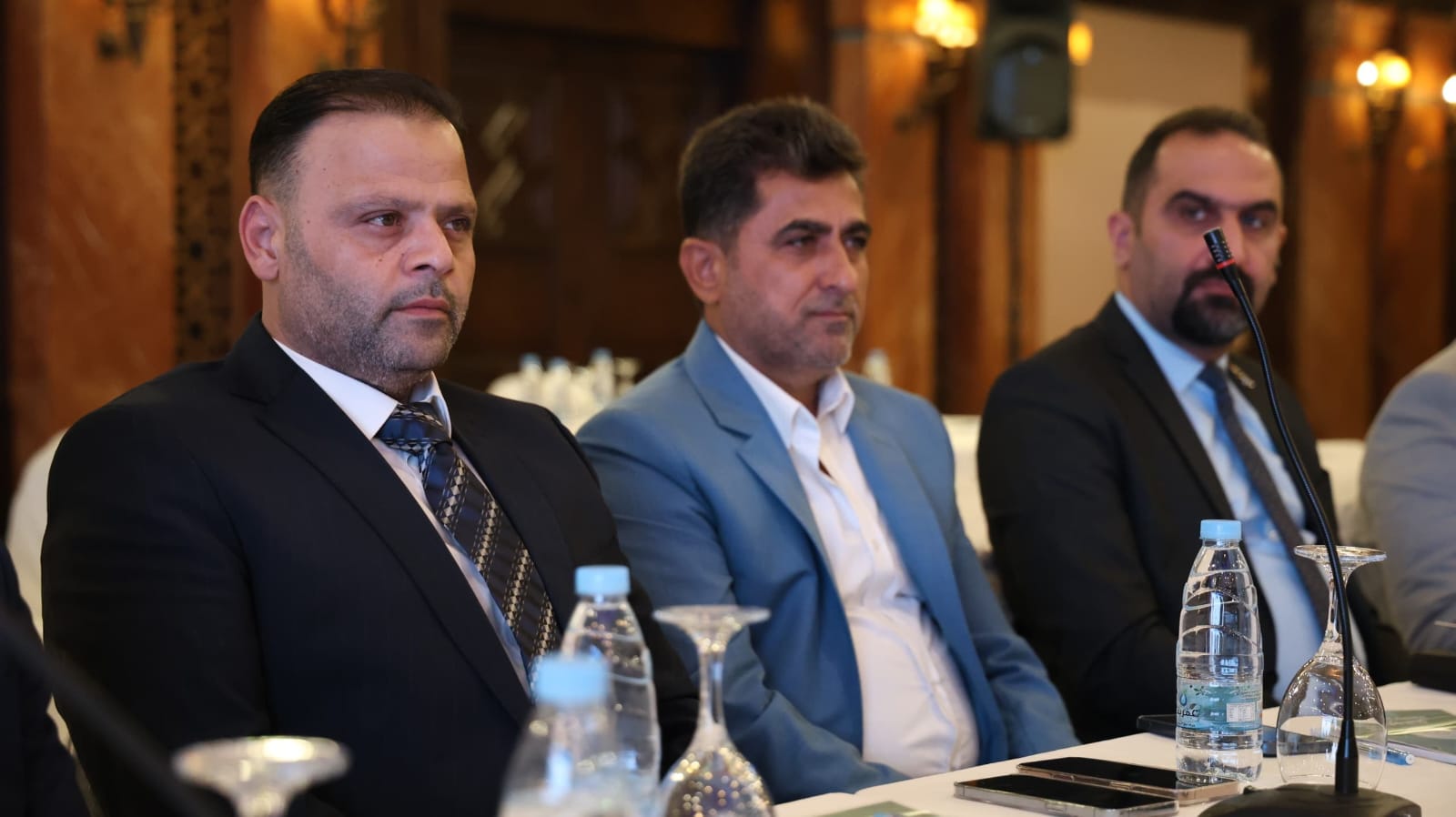
Jamal Othman, Chairman of SCS to " Maritime Tickers "
In an interview with Maritime Tickers, Mr. Jamal Othman, Chairman of the Syrian Chamber of Shipping SCS, expressed his delight at the convening of the 26th session of the Transport and Logistics Committee in the Syrian Arab Republic, specifically in its ancient capital, Damascus. He noted that the country is on the cusp of a significant economic renaissance, in which the expertise of our Arab brothers and regional partners will be invaluable in achieving the desired modernization and prosperity, not only for Syria but for the entire region, given the country's strategic location as a land-sea transport hub.
Executive Secretariat of the Economic and Social Commission for Western Asia (ESCWA)
Mr. Othman added, "As a representative of the Arab Federation of Chambers of Shipping, we are pleased to have given the Executive Secretariat of the Economic and Social Commission for Western Asia (ESCWA) such high priority on the agenda of this meeting, particularly regarding facilitating digital and sustainable trade in the Arab region and ensuring digitalization as a catalyst for sustainable transport within it." The Syrian Chamber of Shipping has undertaken several initiatives to create an effective digital environment within the Syrian maritime transport sector. These initiatives include the Electronic Data Interchange (EDI) system, participation in multimodal transport committees, and other efforts to establish a sustainable transport infrastructure. This infrastructure is based on interconnected, flexible, and integrated elements and principles that enhance Syria's capabilities in this field and maximize its potential.
Meanwhile, the need for serious steps in the transport sector to adapt to the challenges posed by climate change and to implement measures to address extreme and sudden weather events such as floods, rising sea levels, heat waves, and other severe weather phenomena is growing.
Closing of the session and recommendations
The 26th session of the ESCWA Committee on Transport and Logistics concluded after two days of discussions dedicated to exploring the future of sustainable transport in the Arab region and mechanisms for developing regional cooperation. This marked the first UN event of its kind hosted by Syria in the transport sector in over fifteen years.
The session's meetings focused on preparations for the Decade of Sustainable Transport 2026–2035, a UN initiative under development for the past four years, which will be officially launched on December 10th of next year. Discussions also addressed plans to enhance Arab connectivity in the areas of land and sea transport and logistics, in line with the Sustainable Development Goals and the requirements for economic recovery.
The sessions also addressed the impacts of climate change on the transport sector in Syria and explored ways to support fire response operations by improving access routes for vehicles and strengthening road safety measures. The role of ESCWA in coordinating the exchange of Arab expertise related to disaster response and developing joint emergency plans to contribute to rapid response and effective rescue efforts was also emphasized.
ESCWA ,Syria the 26th session , Syria , SCS , Jamal Othman ,Adel Al-Ghabri ,Arab Vision 2045”
You Might Also Like
23 November 2025
Recommendation News
Incidents
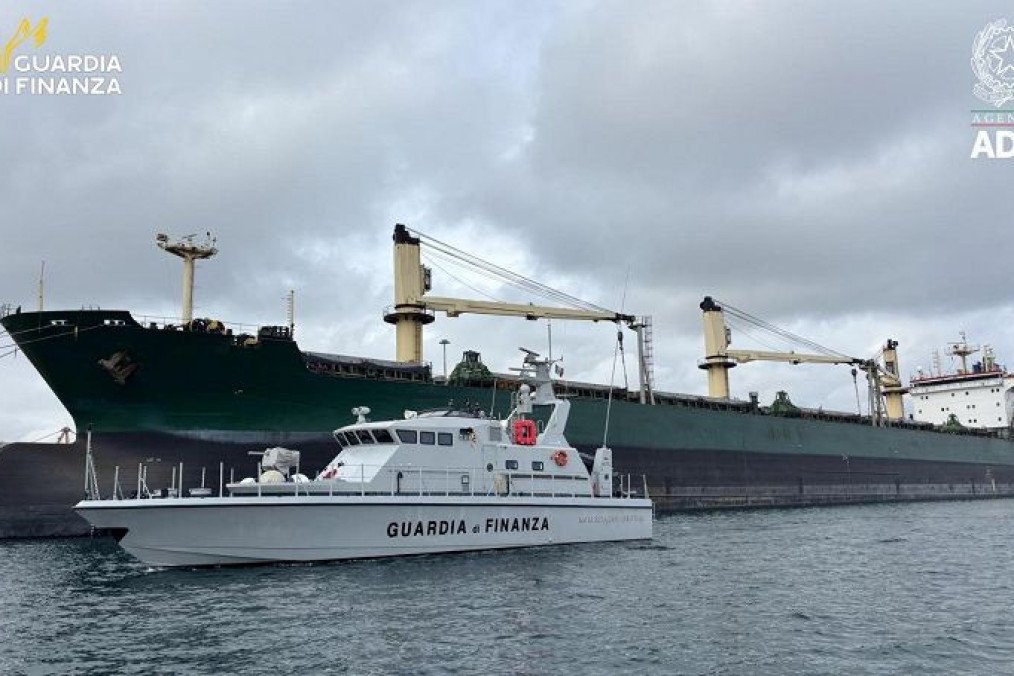
Italy Intercepts Cargo Ship Hizir Reis With Russian Metal in Sanctions 19 January 2026
Marine News Room
A new secure maritime corridor for commercial shipping across Hormuz 12 April 2026
Incidents
Tanker Loaded Catches Fire At France’s Port-la-Nouvelle 16 October 2025
Yachts&Cruises
Ritz-Carlton Yacht Collection in financial turmoil 07 June 2026
Shipping Lines
Evergreen partners with Samsung Heavy on new remote ship-operation hub 02 December 2025