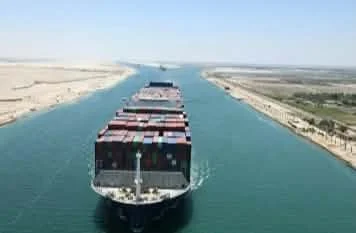
Modern maritime safety resembles an attempt to extinguish a fire once the entire building is already burning
Oil that settles near Kerala can reach diners in Dubai, Tokyo, Barcelona anywhere seafood is consumed.
By : Adam Laabs
Rolbatch technical director, Co-Founder w Rolbatch Laabs Academy, Marine and Ocean Protection Technologies , Axtora Energy Co-Found
There are moments when the world briefly stops scrolling. When a blurry photo of a burning vessel, taken by a fisherman off the coast of Kerala, spreads through social media faster than any official communiqué. When the ocean reminds us that no risk map, no predictive algorithm and no annual report can halt a disaster in the seconds when something goes wrong. And then the same sentence returns, as predictable as the tides: “Again, a disaster.”
That “again” is no exaggeration. It is not rhetorical. It is the natural consequence of a truth we collectively refuse to accept maritime disasters repeat not because the world is negligent, but because the system designed to prevent them does not begin where it should. It begins too late. And when the system reacts instead of preventing, the outcome is inevitable.
Kerala: A Signal the World Should Have Heard More Clearly
When MSC ELSA 3 sank off the coast of India, the online world responded instantly not with action, but with opinions. Analyses, accusations, headlines. The real story, however, had already unfolded in the first thirty minutes, long before the first journalist even heard of the incident.
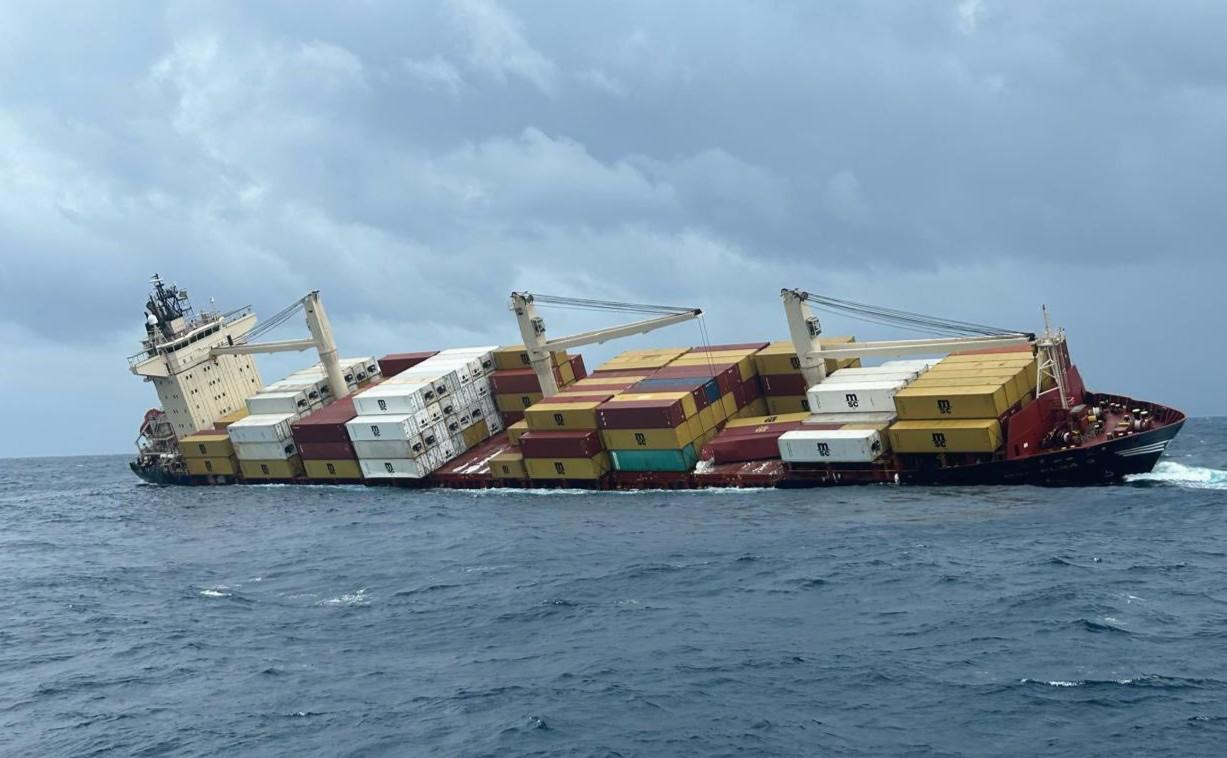
In that brief window, oil had already begun to form a viscous structure that absorbed light like a dark membrane. From the surface it sank deeper, entering the pelagic zone. The ocean has its own physics anything that enters the water is immediately pulled into processes of dispersion, emulsification, sedimentation and biological absorption.
Coral reefs, evolved over hundreds of thousands of years as chemical ecosystems, do not distinguish between organic nutrients and toxic matter. They absorb whatever reaches them. So does plankton, shellfish, bottom-dwellers and fish. This is not speculation. Studies of the last 20 years show that petroleum pollutants enter marine organisms in hours, not days.
Thirty minutes passed in Kerala. That was enough for the oil to reach depths at which no conventional recovery method is effective. But Kerala was not an exception.
A Pattern We Pretend Not to See
Related : Adam Laabs writes : What’s Poisoning the Oceans Isn’t Oil It’s Indifference
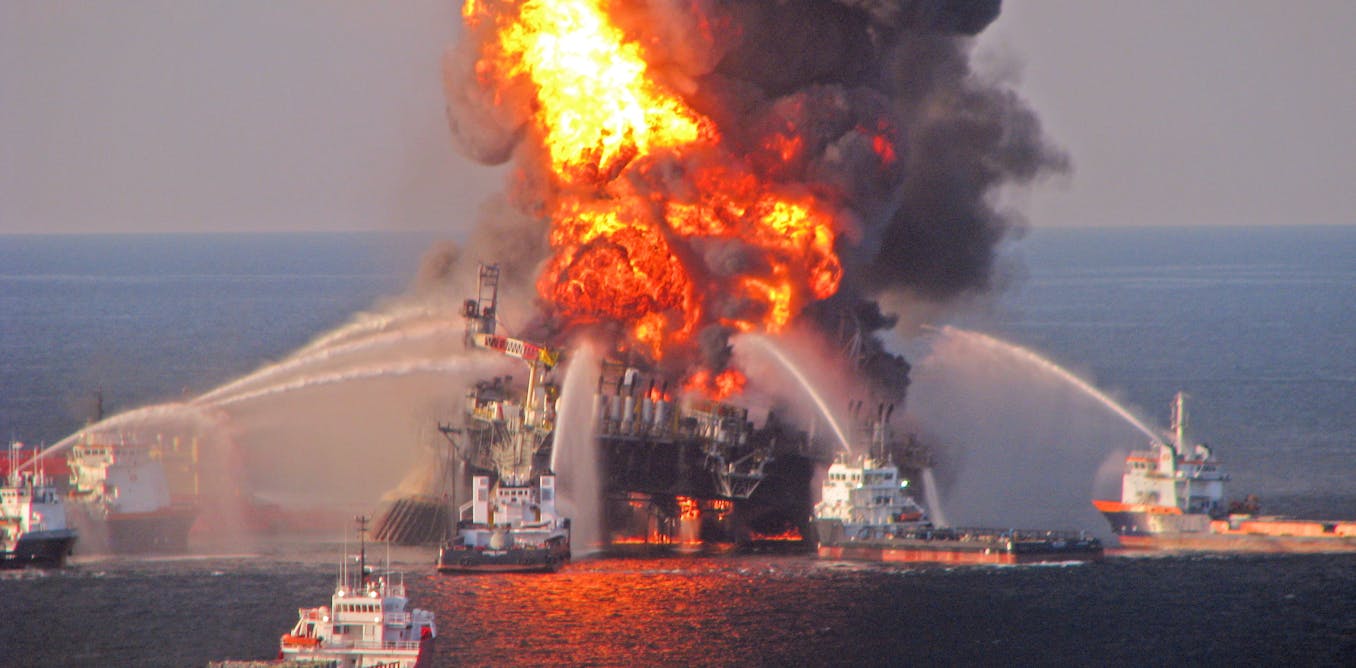
For decades, each “major disaster” was supposed to be the last. Prestige in 2002 oil still remains in deep sediments. Erika ecological effects lasted more than a decade. Deepwater Horizon the largest industrial disaster in U.S. history, still detectable today. Mauritius in 2020 a “small” spill that wiped out coral ecosystems for years.Each was meant to change everything. Each was to redefine safety standards. Each was to close a chapter. And yet the sea chose again.
Not because humanity fails. But because the decisive moments are the first minutes and those minutes contain no pre-installed prevention.
A System That Starts Working After the Damage Occurs
Modern maritime safety resembles an attempt to extinguish a fire once the entire building is already burning. We excel at post-event analysis, in compiling reports, in debating liability. But the most critical part of the system the one operating in the first minute is nearly nonexistent. And yet the first minute is everything. In that minute, oil spreads geometrically, not linearly. In that minute, waves begin pulling it into circulation. In that minute, the ocean mixes with a substance that should never be part of its chemistry .If a vessel cannot act instantly, the disaster is already in motion.
Why Traditional Methods Fail
Classic sorbents, granular absorbents, booms they belong to a past era. They perform well on paper, but not on the ocean.
Granules sink, absorb water, fragment, disperse and become impossible to collect. What cannot be collected sinks. What sinks becomes food for bottom organisms. What bottom organisms absorb becomes food for fish. And what fish absorb becomes food for humans.
This is not metaphor. It is biology.
In countries with high seafood consumption, measurable increases in petroleum-derived compounds in human tissue correlate directly with maritime spill frequency. And these do not require major disasters hundreds of liters spilled weekly are enough. Across the world, ships lose millions of liters every year through micro-leaks that no one ever reports.
“Again, a Disaster” Is Not an Exaggeration
It Is a Diagnosis.If the crew of a vessel in India, Greece, Norway, the UAE, Spain or the United States does not have a minute-zero system on board, then everything depends on the distance of emergency response units. And the ocean does not wait for the nearest rescue ship. The statistics speak clearly: Average emergency response arrival time: 45–120 minutes. Average time after which a spill becomes irreversible: 12–20 minutes. That is not a technological gap. It is a structural gap. And it is in this gap that disasters grow.
AquaGuard – Minute-Zero Technology
If high-risk vessels carried onboard containers with AquaGuard a sorbent fabric that does not sink, does not disperse, does not absorb water, stays cohesive in waves and selectively binds hydrocarbons the response could begin instantly.
Within seconds. Not hours.
The crew could deploy a containment barrier before the first dispersion phase begins. Satellite monitoring could detect micro-leaks invisible to the human eye. This is not the future. It exists now. A system that can be implemented before the next “again” appears in headlines . And the economics are indisputable: prevention costs a fraction of one disaster. Response costs hundreds of millions of dollars. A single minute-zero installation costs less than a fraction of one day of cleanup operations.
Why This Concerns Everyone
Maritime disasters are not local. A fish caught in one country can be sold in another. Ocean currents carry pollution farther and faster than rescue units can travel .Oil that settles near Kerala can reach diners in Dubai, Tokyo, Barcelona anywhere seafood is consumed. This is not theory. This is the global ocean at work. The belief that “it happens far away” is the most dangerous illusion. It happens where the system is unprepared. And unprepared can be anywhere.
“Again, a Disaster” and What Comes Next
If we want future disasters to end differently, the logic must change. This is not the responsibility of a single company, a single state or a single environmental NGO. This is an architectural issue in global maritime safety.
Shipowners must adopt a simple rule: every high-risk vessel must carry minute-zero prevention modules. Insurers must reward technology that reduces losses before they occur. Energy companies must view maritime safety not as a cost but as operational risk reduction. Governments must demand prevention not only post-disaster reports. The ocean does not require promises. It requires systems that act in the first second.
And Finally Why This Must Be Shared
Silence is the greatest ally of catastrophe. As long as we treat disasters as distant, they will occur closer each time. If you believe this topic deserves wider attention, feel free to share it. Insights from captains, engineers, regulators, scientists and operators matter because it is such voices, not post-event documentation, that shape future standards.
And if your organization is exploring prevention, monitoring or minute-zero safety technologies including full integration with AquaGuard I welcome a private conversation. As long as we still have the ability to act before the next disaster, we have the ability to prevent the next “again.”
AquaGuard ,Adam Laabs ,Deepwater Horizon,Mauritius in 2020 , coast of Kerala ,Oil , MSC ELSA 3 , a Disaster
You Might Also Like

Recommendation News

Ports
Port of Hamburg strengthens presence in the Gulf region 24 February 2026
Shipping Lines
The impact of the Strait of Hormuz closure on global maritime traffic 01 March 2026
Incidents
240 Kilograms of Cocaine Seized in the Port of Genoa 16 October 2025
Marine News Room
New Details New Details : Naval battle between the US and Russia in the Atlantic, two oil tankers seized 08 January 2026
Incidents
18 Egyptians missing and 3 others dead in the sinking of an illegal immigration boat - Details 25 February 2026