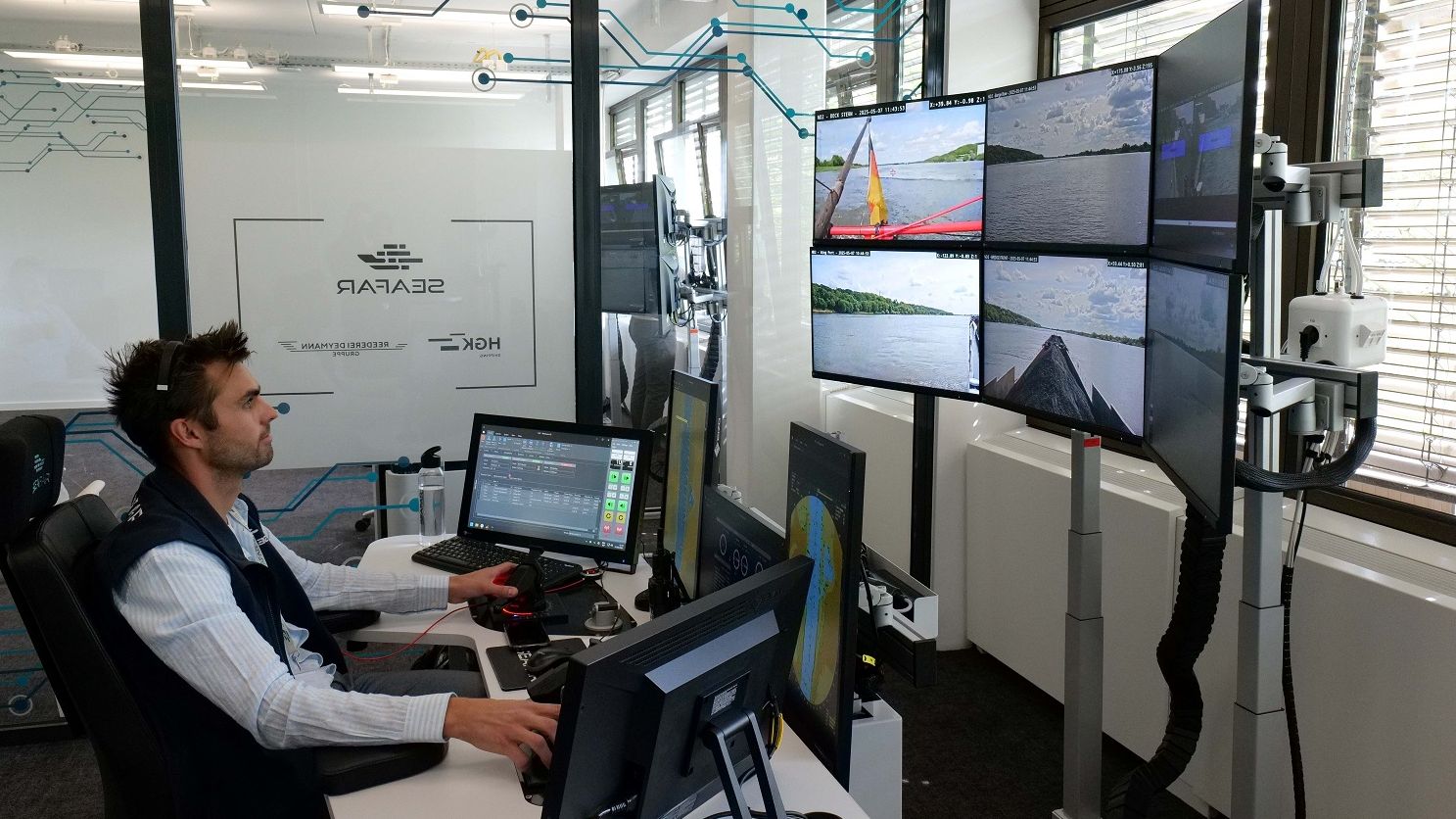
Cameras on all sides and a good mobile network connection are all you need to remotely control a large cargo ship.
The trial involves the vessel “Lower Saxony 2,” which will be remotely piloted through the Elbe Canal using radar, radio communications, and controls
The German government’s authority issues an initial permit for test operations for remote-controlled inland waterway vessels on the German canal network HGK_Shipping_Test_Permit_Remote_Control
A captain sits at his desk in Duisburg, Germany, as his ship sails 400 kilometers through a canal near Lüneburg. This is the goal of the Cologne-based German shipping company HGK Shipping, which has received approval to conduct a six-month trial of remotely operating a cargo ship along a major German canal. The ship will be controlled from a command center approximately 400 kilometers away.

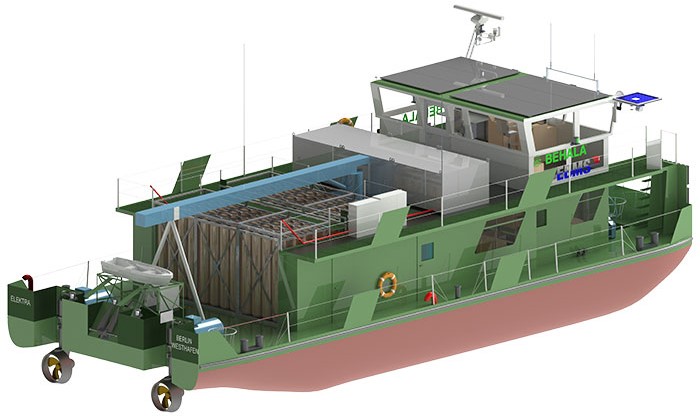
The vessel “Lower Saxony 2”
The trial involves the vessel “Lower Saxony 2,” which will be remotely piloted through the Elbe Canal using radar, radio communications, and controls from an office in Duisburg, western Germany. This technology aims to address the acute shortage of skilled workers by providing a stable office role for ship captains, replacing long periods of continuous work at sea. “It’s an effective tool to make the profession more attractive to skilled workers,” said company CEO Steffen Bauer.
Competitor Rhinos
Other companies are also following a similar approach. Competitor Rhinos is also developing its own remote navigation system, with plans to establish its own command center by 2030. Herbert Berger, managing director of Rhinos Ship Management, said the system will create more attractive jobs for ship captains.
To combating the severe staffing shortage
This technology is seen as a promising approach to combating the severe staffing shortage. While seafarers on inland waterways currently spend at least 14 days on the road per trip, ship captains in the remote control center will have a regular office job and a possible normal private life after work. Meanwhile, politicians have a strong stake in the project’s success, according to the German newspaper Süddeutsche Zeitung.
Related : Project Vanguard: Wind-powered diesel-electric gas tanker design
Inland Water
The fact is that inland waterways are the only free-range transport mode we have in Germany,” German Transport Minister Patrick Schneider said, according to the newspaper. “The shortage of skilled workers should not slow down this potential,” he emphasized.
Related: TT Club :Continued growth in risk to inland waterway operations
Source : Press - Release
Germany , Remote-controlled , inland waterway vessels ,. Herbert Berger,Patrick Schneider ,“Lower Saxony 2,”, Rhinos
You Might Also Like

Recommendation News

Marine News Room
ON LinkedIn : Gavin Allwright : We definitely face a major challenge, but headwinds to change are nothing new 03 November 2025
Ports
Port Houston reports a 2% TEU growth as the Bayport berth 20 March 2026
Yachts&Cruises
France clears cruise ship to sail after norovirus outbreak sickens dozens 14 May 2026