The vessel, which has an overall length of 145 metres, will sail under the Danish flag, according to information about the WTIV shared earlier.
Maersk Offshore Wind and Seatrium reported that their under-construction massive offshore wind installation vessel has completed sea trials. The vessel’s delivery, however, is approaching as the future of the U.S. offshore wind industry for which it was designed remains uncertain.
Seatrium reports that the vessel, which is approximately 475 feet (145 meters) in length, successfully completed its trials in the South China Sea. Both Maersk Offshore Wind and the vessel’s classification society participated in the trials. They are continuing to work towards the agreed delivery of the vessel by the end of February. In October the Maersk unit cancelled the WTIV it ordered at Seatrium in March 2022 at cost of $475 million. At the time of the termination the vessel was 98.9% complete and due for delivery on 30 January 2026.
In a statement on 22 December
In a statement on 22 December Seatrium said Seatrium Energy (International) and Maersk’s Phoenix II had reached a resolution over the dispute and Maersk had agreed to take delivery of the vessel by 28 February 2026 paying the balance of $360 million owing under the contract. To date Seatrium had only received a 20% down payment on the newbuilding.. To conclude the purchase Seatrium has agreed to provide $250 million in interest bearing credit to the buyer through Seatrium SG (SGS). The credit is under a 10-year arrangement and will be repaid by earnings from the WTIV. SGS will have a mortgage over the vessel.
When US President Trump called a halt to the Empire Wind 1 development
It is noteworthy that the first WTIV was ordered in 2023 to be built at what is now Seatrium’s yard in Singapore for delivery to the United States by 2025. In 2024, they announced a partnership with Edison Chouest Offshore, saying the U.S. shipyard would build the tugs and barges for the installation system at the Bollinger Shipyards.
The WTIV was being built for deployment at the $5 billion Empire Wind 1 windfarm that was being developed offshore the coast of New York’s Long Island by Norway’s Equinor. US President Trump called a halt to the Empire Wind 1 development in April this year, however, work resuming in the second half of May.
The project appears to be back on track
The story goes back when the project appears to be back on track after a dispute between the customer and shipbuilder last fall. Citing problems with the construction, Maersk Offshore Wind had announced it was canceling the contract, and both companies invoked arbitration. The dispute was settled in December with Seatrium agreeing to finance $250 million of the $360 million contract price, giving Maersk Offshore Wind an interest-bearing credit arrangement good for up to 10 years. Seatrium will have a mortgage on the vessel as well as first priority rights, with the financing to be paid through the cash generated by the vessel.
One of the five projects that were ordered by the Trump administration to stop offshore work
---abb-marine-ports.jpg?sfvrsn=28ede108_1)
Related : Equinor : Gas discovery in the Norwegian Sea
Meanwhile the installation vessel is contracted to Equinor for the Empire Wind offshore project located south of New York’s Long Island. It is one of the five projects that were ordered in December by the Trump administration to stop offshore work. Equinor has filed suit seeking a preliminary injunction to resume offshore work, but the company has said in court filings that if work does not resume by January 16, “cascading effects” could result in the project’s cancellation. Heerema’s heavy-lift vessel Sleipnir is currently transporting the project’s topside and is scheduled to install it in late January. If that cannot proceed as scheduled, Equinor warns the topside might have to be sent to Europe, as it doubts a storage site and crane could be secured in the United States.
Seatrium and Maersk have withdrawn their arbitration
After events unfolded after evaluating all feasible options alongside the end-customer, is of the view that the arrangement above is the optimal way forward for the interests of the Group and the Company’s shareholders, taking into consideration the relevant circumstances, including financial impact, certainty of recoverability, and the risk of lengthy and costly legal proceedings,” Seatrium said. Both Seatrium and Maersk have withdrawn their arbitration
Maersk Offshore Wind

Maersk Offshore Wind has not commented on its outlook. The company was launched several years ago, shedding its oil service work to focus on wind energy. Owned by AP Moller Holdings, the company had emphasized the strong opportunities in the business. Its website says a second, XL conventional jack-up installation vessel was designed in collaboration with GustoMSC, but the vessel has not been reported as ordered
The Jones Act
The new vessel, which underwent sea trials in the South China Sea, is part of Maersk Offshore Wind’s feeder solution, whereby the WTIV remains at a project site to carry out installations, while feeder vessels ferry the wind turbine components out to the site. Both the Maersk WTIV and the feeder vessels are equipped with new locking and stabilising technology, enabling safe operations in harsh environments, reducing the number of days required to install the wind park.
The Jones Act-approved concept is projected to reduce the number of days required to install an offshore wind farm by 30 per cent, according to Maersk Offshore Wind. The vessel, which has an overall length of 145 metres, will sail under the Danish flag, according to information about the WTIV shared earlier.
Related : US threatens in October after reject IMO’s Net Zero Framework
Source : Agencies
#Seatrium-buil WTIV #Maersk Offshore Wind.#U.S. offshore wind industry # Trump #Arbitration #Seatrium Energy # Sea Trials #Maersk’s Phoenix II # The Jones Act-
You Might Also Like

Recommendation News
Ports
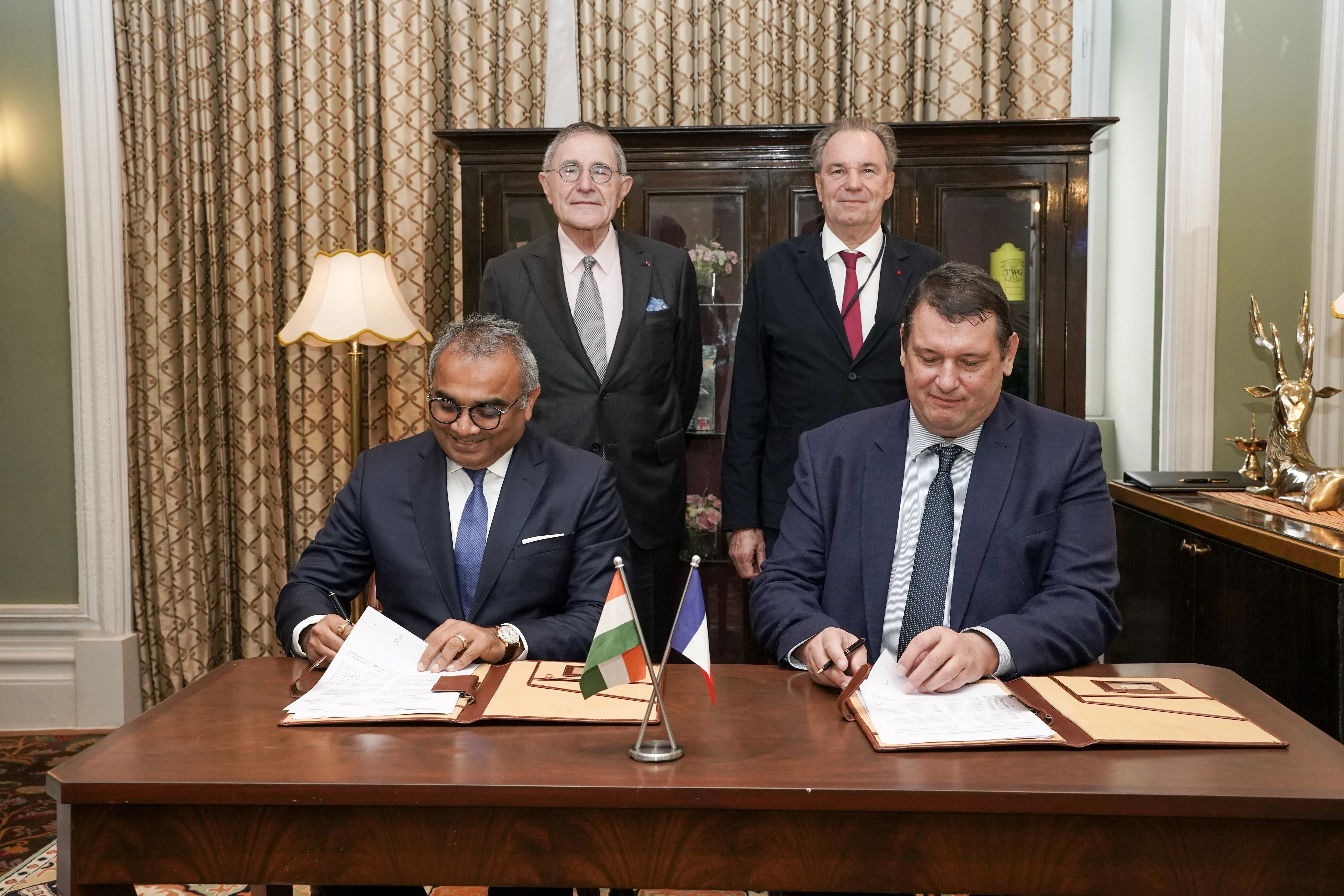
Adani Ports signs pact with Port Marseille Fos to boost IMEC trade corridor 19 February 2026
Marine Cultures
Cartons with Sakhraoui Tarek Caricaturiste 24 January 2026
Incidents
After Eight Years Captain of Costa Concordia Seeks Release 16 October 2025
Shipping Lines
New Damietta Alliance Container Terminal (DACT) Launches Commercial Operations 15 February 2026
Incidents
Detention of a Turkish cargo ship and its crew at the Libyan port 18 October 2025