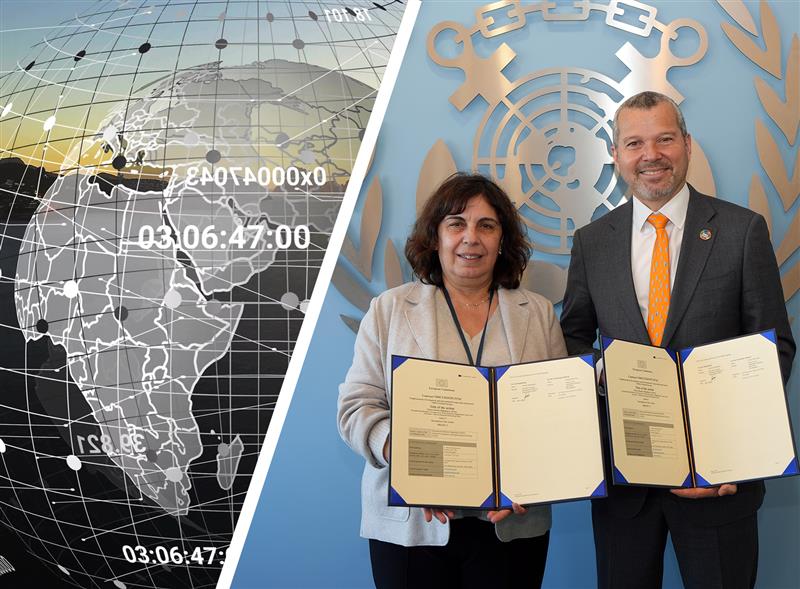
The "Future-Ready Shipping in Africa" projectis backed by a €5 million from the European Union, strengthening gender balance within the maritime sector.
The International Maritime Organization (IMO) and the European Union (EU) have officially launched the "Future-Ready Shipping in Africa" project. The initiative is designed to support the African continent's transition toward a sustainable, decarbonized, and digitally advanced maritime sector.
The project is backed by a €5 million pledge from the European Union, confirmed during a recent signing ceremony (26 November). The goal is to promote economic growth, environmental protection, and social development, with a specific focus on strengthening gender balance within the maritime sector.
The project's work is structured around four core objectives:
1. Strengthening Maritime Governance
The project will provide technical assistance and facilitate consultations to help African countries align their national policies and laws with MARPOL Annex VI requirements and IMO climate goals. This includes updating national legislation to meet current international standards.
2. Advancing Alternative Fuel Infrastructure
To accelerate the maritime decarbonization transition, the project will conduct feasibility studies and develop "bankable" business cases for the establishment of bunkering facilities for alternative fuels and the creation of green corridor projects in selected African ports.
3. Enhancing Digitalization and Maritime Single Window (MSW) Implementation
Efforts in this area involve carrying out readiness assessments and developing national roadmaps for the Maritime Single Window (MSW). The objective is to improve data interoperability, strengthen data security, and enhance regulatory compliance and environmental reporting efficiency.
4. Upgrading Maritime Education and Training (MET)
The initiative will also focus on improving curricula to include training on alternative fuels, biodiversity protection, and digital technologies. This objective includes providing dedicated training and scholarships to equip a diverse workforce with the necessary new skills for the future maritime industry.
Beneficiary Selection
Five Sub-Saharan African countries will be selected to benefit from the project through an open Expression of Interest process. The selection will be undertaken based on a range of considerations, including the availability of needs assessments, the need to avoid duplication of efforts, demonstrated political commitment to maritime decarbonization, potential for alternative fuel production and trade facilitation, as well as clearly identified needs for institutional strengthening. In addition, the educational component will leverage partnerships with regional maritime universities to enhance capacity-building and ensure sustained impact.
Related : MO : Strengthening gender-inclusive maritime policy in Latin America
IMO , European Union ,Five Sub-Saharan African countries ,Future-Ready Shipping ,Africa , maritime sector. (MSW) , MARPOL Annex VI
You Might Also Like

15 October 2025
Recommendation News
Incidents
US destroyer and a helicopter intercept two Iranian oil tankers 26 April 2026
Yachts&Cruises
The 36-metre Van der Valk yacht Jangada is departing for the UK. 06 April 2026
Shipping Lines
Swedish, Norwegian, and Canadian owners have co-ordered four VINGA product tankers 31 August 2026
Yachts&Cruises
ISA BLADE 70-metre – a new collaboration with Lobanov Design is underway 20 March 2026
Incidents
Container MSC carrying “hazardous cargo” Sunk off Kochi coast 17 October 2025