The MIT Maritime Consortium unites academia and industry to support the development of cutting-edge technologies that aim to transform the sector, including alternative fuel and new nuclear technologies
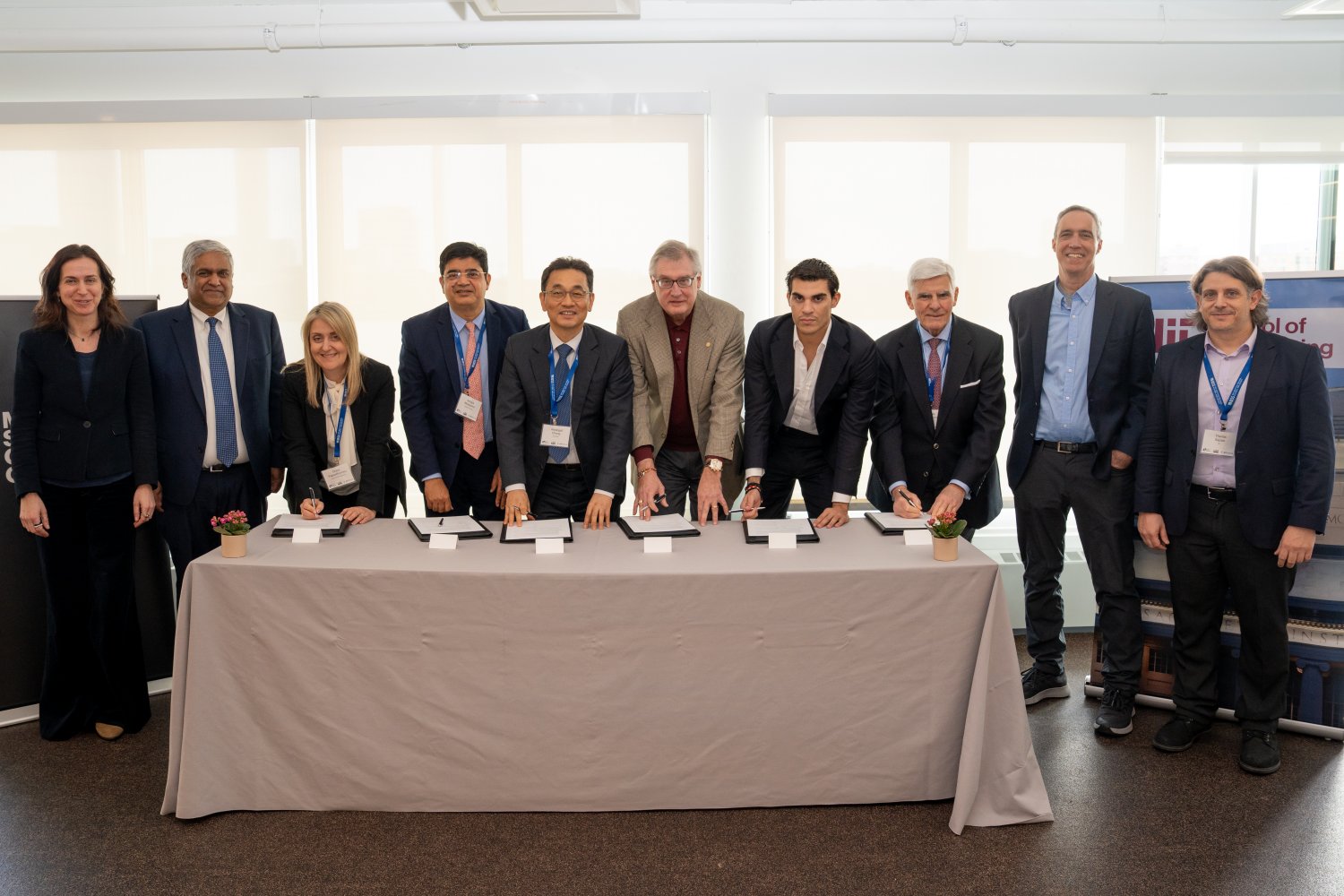
(CAMBRIDGE, Mass.) ABS, in collaboration with leading players in the maritime industry, has joined an ambitious initiative from the Massachusetts Institute of Technology (MIT) to tackle challenges facing global shipping.
The MIT Maritime Consortium unites academia and industry to support the development of cutting-edge technologies that aim to transform the sector, including alternative fuel and new nuclear technologies, data-powered strategies for efficient operations and decision making, autonomy and cybersecurity, as well as on-board manufacturing of spare parts.
Consortium’s Founding Members
ABS, Capital Clean Energy Carriers Corp., and HD Korea Shipbuilding & Offshore Engineering are the Maritime Consortium’s Founding Members. Innovation Members are Foresight-Group, Navios Maritime Partners, L.P., Singapore Maritime Institute, and Dorian LPG.
Related : ABS Approves Pioneering Maritime Autonomy Framework from MTI
The global shipping shapers
“This consortium brings a powerful collection of significant companies that, together, has the potential to be a global shipping shaper in itself,” says Christopher J. Wiernicki, ABS Chairman and CEO. “The members are all world-class organizations and real difference makers.
MIT’s technology : The emissions challenge
The ability to harness their experience and know-how, along with MIT’s technology reach creates real jet fuel to drive progress. As well as researching key barriers, bottlenecks and knowledge gaps in the emissions challenge, the consortium looks to enable development of the novel technology and policy innovation that will be key. Long term, the consortium hopes to provide the gravity we will need to bend the curve to reach emissions objectives.”
Interdisciplinary research agenda
“This is a timely collaboration with key stakeholders from the maritime industry with a very bold and interdisciplinary research agenda that will establish new technologies and evidence-based standards,” says Themis Sapsis, the William Koch Professor of Marine Technology and the director of MIT’s Center for Ocean Engineering.
“It aims to bring the best from MIT in key areas for commercial shipping, such as nuclear technology for commercial settings, autonomous operation and AI methods, improved hydrodynamics and ship design, cybersecurity and manufacturing.”
Related : ABS and PIL Sign MOU to Advance Maritime Operations

Multiple research projects
The consortium will launch multiple research projects designed to tackle challenges from a variety of angles, all united by cutting-edge data analysis and computation techniques. Collaborators will research new designs and methods that improve efficiency and reduce greenhouse gas emissions, explore the feasibility of alternative fuels, and advance data-driven decision making, manufacturing and materials, hydrodynamic performance, and cybersecurity.
MIT has been a leading center of ship research
MIT has been a leading center of ship research and design for over a century, and is widely recognized for contributions to hydrodynamics, ship structural mechanics and dynamics, propeller design, and overall ship design, and its unique educational program for U.S. Navy Officers, the Naval Construction and Engineering Program. Research today is at the forefront of ocean science and engineering, with significant efforts in fluid mechanics and hydrodynamics, acoustics, offshore mechanics, marine robotics and sensors, and ocean sensing and forecasting. The consortium’s academic home at MIT also opens the door to cross-departmental collaboration across the Institute.
Greenhouse gas emissions.
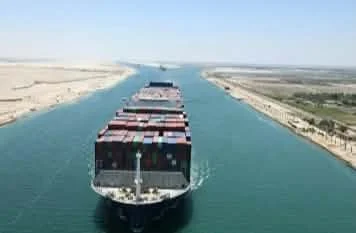
It is noteworthy that around 11 billion tons of goods, or about 1.5 tons per person worldwide, are transported by sea each year, representing about 90 percent of global trade by volume. Internationally, the merchant shipping fleet numbers around 110,000 vessels. These ships, and the ports that service them, are significant contributors to the local and global economy — and they’re significant contributors to greenhouse gas emissions.
Learn more about the Maritime Consortium at maritime.mit.edu.
Press - Release received by Maritime Tickers + other sources
ABS , greenhouse gas emissions , New MIT Maritime Consortium ,Christopher J. Wiernicki,, multiple research projects , MIT’s technology
You Might Also Like
Recommendation News

Incidents
Fire on 3 ships in the Sea of Oman before the Strait of Hormuz 17 October 2025
Marine News Room
Prof.Dr. Moustafa M. El-Gammal: The Triangle of Death 06 October 2025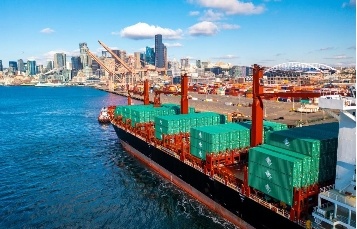
Shipping Lines
Sea-Intelligence: Container liner punctuality at its highest in April 31 May 2026
Yachts&Cruises
Voyevoda Russian Rescue Ship “Putin’s New Yacht " 2026 12 January 2026
Incidents
Reuters : Drones hit two tankers in Black Sea as Kazakh oil production plummets, 14 January 2026