The auditing and design of AtoN systems must evolve toward a hybrid model. The installation of equipment alone is no longer sufficient
By : James Crawford
Assessor in decisions of operations and innovations for technology,
for the necessary operations in maritimo-portuarias
Historically, coastal defense relied on a tactic as rudimentary as it was effective: in the face of a threat, the lighthouse was simply extinguished. Total darkness acted as an insurmountable physical barrier, where the risk of running aground far outweighed any strategic advantage of an attack. However, in today’s geopolitical landscape, the strategy has mutated from the omission of signals to the sophisticated manipulation of digital reality. Today, the challenge for Aids to Navigation (AtoN) is no longer the absence of data, but its integrity.
The phenomenon of GNSS spoofing.
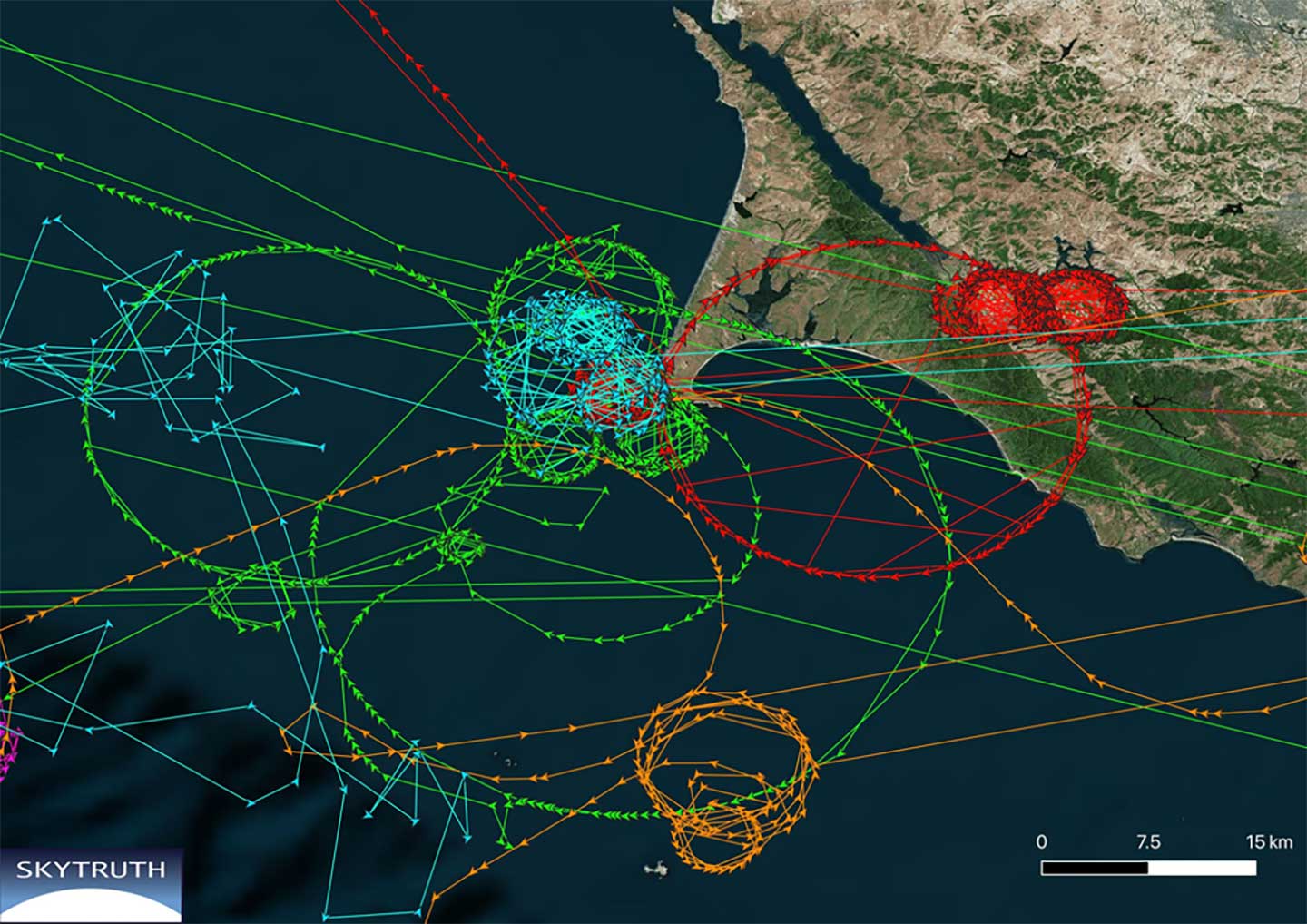
Unlike the information vacuum of the past, modern navigation faces the phenomenon of GNSS Spoofing. In this scenario, the attacker does not interrupt the signal but injects a false one, causing receivers to report a safe position while the vessel drifts miles away from its original course. This invisible displacement, coupled with strategic jamming—which saturates frequencies with electromagnetic noise—nullifies the precision of guidance systems and compromises both civil logistics and national security in high-tension zones.

A resurgence in the importance of inertial navigation systems
As a consequence of this vulnerability, the industry is experiencing a paradoxical return to fundamentals to guarantee operational resilience. Given the volatility of satellite constellations, we are seeing a resurgence in the importance of inertial navigation systems and the strengthening of high-tech physical AtoN. We are learning that the safety of global routes can no longer rely exclusively on external signals susceptible to interception or degradation.
Design of AtoN systems must evolve
Under this panorama of uncertainty, the auditing and design of AtoN systems must evolve toward a hybrid model. It is no longer enough to simply install equipment; it is imperative to design infrastructure capable of operating in signal-denied or degraded environments.
A port's ability

A port's ability to keep its communication and logistics lines open during a crisis depends, now more than ever, on a signaling strategy that regards cybersecurity and physical redundancy as non-negotiable pillars.
Are your port facilities and maritime routes prepared to guarantee operational continuity when digital technology ceases to be a guarantee and becomes a contested asset in today's conflict and crisis situations?
Source : LinkedIn
#James Crawford # Aids to Navigation (AtoN) # port #AtoN Resilience # Digital Conflict #GNSS Spoofing
You Might Also Like

06 December 2025
Recommendation News

Seafarers
Hristiyan Rusev writes : Why Many Cadets and Junior Officers Stay Stuck 23 April 2026
Shipping Lines
MSC submits an offer and joins Hapag Lloyd in the race for Zim 16 December 2025
Ports
Circle Group wins €280,000 contract to digitize the port supply chain 26 December 2025
Shipping Lines
Saipem’s FlatFish underwater drone successfully completes test campaign with Petrobras 21 March 2026